Author: Asharq Al-awsat Staff

  • Hezbollah Chief Says Group’s Weapons Not Part of Negotiations with Israel

    Hezbollah Chief Says Group’s Weapons Not Part of Negotiations with Israel

    Hezbollah chief Naim Qassem said Tuesday that his Iran-backed group’s weapons were not part of upcoming negotiations between Lebanon and Israel, and vowed his fighters would turn the battlefield into “hell” for Israeli forces.

    “Nobody outside Lebanon has anything to do with the weapons, the resistance… this is an internal Lebanese matter and not part of negotiations with the enemy,” Qassem said in a written statement ahead of a third round of talks in Washington between Lebanese and Israeli representatives this Thursday and Friday.

    “We will not surrender and we will continue to defend Lebanon and its people, however long it takes and however great the sacrifices… we will not abandon the battlefield and we will turn it into hell for Israel,” he added in the statement, which was addressed to the group’s fighters and broadcast on its Al-Manar television channel, as fighting continues in Lebanon despite a ceasefire.

    Original Post

  • Iran Chief Negotiator Says US Must Accept Proposal or Face ‘Failure’

    Iran Chief Negotiator Says US Must Accept Proposal or Face ‘Failure’

    Iran’s chief negotiator on Tuesday issued an ultimatum to the United States to accept the conditions in Tehran’s 14-point proposal for peace in the Middle East war or face “failure”.

    The defiant message came after US President Donald Trump rejected the latest counteroffer from Iran and said that a fragile ceasefire in place since April 8 was on “life support”.

    But Mohammad Bagher Ghalibaf said Washington had to accept Tehran’s “rights” if it wanted to end more than two months of conflict, as peace talks remain deadlocked after an initial round failed to produce a breakthrough last month.

    “There is no alternative but to accept the rights of the Iranian people as laid out in the 14-point proposal. Any other approach will be completely inconclusive; nothing but one failure after another,” said Ghalibaf in a post on X.

    “The longer they drag their feet, the more American taxpayers will pay for it.”

    Iran has refused to back down in its war with Washington, with military officials warning they are prepared to respond to any renewed US attack.

    It has choked traffic through the key Strait of Hormuz trade route, rattling global markets and giving it vital leverage, while the US has imposed its own naval blockade on Iranian ports.

    Details of the latest US proposal remain limited, though media reports say it involves a one-page memorandum of understanding aimed at ending the fighting and establishing a framework for negotiations on Iran’s nuclear program.

    Iran’s foreign ministry said its response called for ending the war on all fronts, including Lebanon, halting the US naval blockade on Iranian ports and securing the release of Iranian assets frozen abroad under longstanding sanctions.

    It did not elaborate on what Iran would offer in return.

    On Tuesday, the spokesman for Iran’s parliamentary national security commission said lawmakers would consider the possibility of enriching uranium to weapons-grade levels if conflict resumed.

    “One of Iran’s options in the event of another attack could be 90 percent enrichment. We will examine it in parliament,” Ebrahim Rezaei wrote in a post on X.

    Tehran possesses a significant stockpile of uranium enriched to 60 percent purity, with roughly 90 percent required for a nuclear weapon.

    Iran’s stockpile of highly enriched uranium remains a key sticking point in negotiations with the United States, which insists the material must be transferred out of the country.

    Iran has so far refused to move its enriched uranium stockpile abroad and insists on its right to the peaceful use of nuclear energy, though it has said the level of enrichment remains “negotiable”.

    Original Post

  • Japan Crisp Packs to Go Colorless Due to Iran War Crunch

    Japan Crisp Packs to Go Colorless Due to Iran War Crunch

    Japan’s leading potato chip maker is feeling the crunch from shortages linked to the Iran war, swapping its signature orange-and-yellow packets for black and white.

    A household name in Japan, Calbee is known for its savory potato chips with an array of flavors from seaweed salt to soy sauce and butter.

    The company said Tuesday it will “revise the packaging specifications” and use just “two colors” in packaging for 14 product lines beginning later this month or in June.

    It did not say which two colors, but the statement showed photos of grey packaging.

    Calbee blamed “supply instability for certain raw materials resulting from the escalating tensions in the Middle East”.

    Local media said the snack-maker has seen its procurement of printing ink compromised by shortages of naphtha, an oil byproduct used in a wide range of industries.

    The goods affected included several potato chip products, as well as a breakfast cereal and Kappa Ebisen, a moreish shrimp snack known for the slogan “can’t stop, can’t stop”.

    “We will continue to respond swiftly and flexibly to changes in the business environment, including geopolitical risks, while striving to deliver safe, reliable, and satisfying products,” the company said.

    Another Japanese food company, Itoham Yonekyu Holdings, also told AFP that going black-and-white or using different kinds of inks for some of its products were among possible options in the future, similarly blaming supply problems due to the Middle East conflict.

    Roughly a fifth of the world’s oil normally passes through the Strait of Hormuz, and its de facto closure since the war began in late February has sent prices soaring.

    Japan’s Prime Minister Sanae Takaichi previously said Tokyo was expected to have enough naphtha-derived chemical products to last beyond the end of the year after boosting imports from outside the Middle East.

    Last week Takaichi said that the global oil supply squeeze was inflicting an “enormous impact” on the Asia-Pacific region.

    Original Post

  • UK’s Starmer Defies Calls to Quit, Says He Is Getting on with Governing

    UK’s Starmer Defies Calls to Quit, Says He Is Getting on with Governing

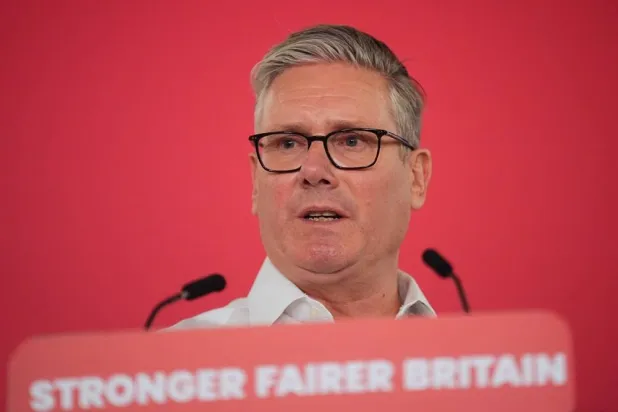
    Prime Minister Keir Starmer defied calls to resign on Tuesday, telling ministers he would “get on with governing” despite a “destabilizing” 48 hours of growing calls to set out a timetable for his departure after an election drubbing.

    At a meeting of his cabinet team of ministers, ‌Starmer, in the top ‌job for less than two years, ‌repeated ⁠that while he ⁠took responsibility for one of his Labour Party’s worst election defeats, there had been no official move to trigger a leadership contest.

    “The past 48 hours have been destabilizing for government and that has a real economic cost for our country and for families,” Starmer told ministers, according to his Downing Street office.

    “The ⁠country expects us to get on with ‌governing. That is what I ‌am doing and what we must do as a Cabinet.”

    British government ‌bonds rallied weakly on Starmer’s comments, but remained firmly ‌in the red for the day.

    His defiance was in marked contrast to the feelings of many in his Labour Party.

    On Tuesday, a junior minister resigned after a handful of ministerial aides also ‌left the government. More than 80 Labour lawmakers have publicly called for him to set ⁠a resignation ⁠date so the party could install a new leader in an orderly manner.

    Starmer had sought to shore up his position on Monday when he promised to act more boldly and with more urgency to tackle Britain’s many problems.

    He had said the country would never forgive the center-left Labour Party if it embarked on a leadership challenge, just two years after its huge parliamentary majority was supposed to bring an end to the political chaos that had gripped the country since Britain voted to leave the European Union 10 years ago.

    Original Post

  • Veteran Goalkeeper Ochoa Joins Mexico Camp with Sixth World Cup in Sight

    Veteran Goalkeeper Ochoa Joins Mexico Camp with Sixth World Cup in Sight

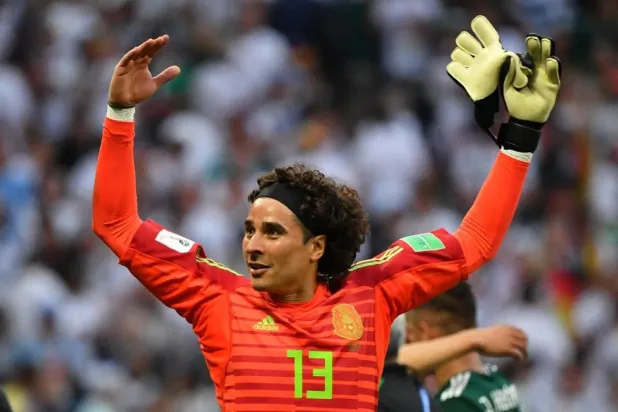
    Mexico goalkeeper Guillermo ‌Ochoa said on Monday he had joined his final training camp with the national team as the veteran closes in on a likely sixth World Cup appearance next month.

    The 40-year-old is widely expected to be included in coach Javier Aguirre’s squad for the World Cup, which Mexico will co-host alongside the United States and Canada from June 11 to July 19.

    “Putting this shirt on again was never routine … it was a privilege,” Ochoa wrote on social ‌media. “Today begins my ‌last training camp. But this time I ‌see ⁠it differently. With ⁠a fuller heart, more scars, more memories, and the same excitement as the child who once dreamed of defending this badge.”

    Ochoa is set to become one of the few players to appear at six World Cups, alongside Lionel Messi and Cristiano Ronaldo, having previously represented Mexico at Germany ⁠2006, South Africa 2010, Brazil 2014, Russia ‌2018 and Qatar 2022.

    The ‌stopper has also suggested the tournament could mark the end of ‌his career, telling Mexican broadcaster TUDN last month that ‌it “could be the end for me after the World Cup” as he prepares for what is expected to be his final season in professional football.

    “I’ve experienced unforgettable nights, endless matches, anthems that ‌still give me goosebumps, and moments that changed my life forever,” Ochoa wrote.

    “And still, ⁠every time ⁠Mexico calls, something inside me begins again.”

    Ochoa, who currently plays for AEL Limassol in Cyprus, has earned more than 150 caps for Mexico and remains one of the country’s most recognizable players after standout World Cup performances, including a series of saves against Brazil in 2014 and a penalty stop against Poland’s Robert Lewandowski in 2022.

    Mexico will complete their World Cup preparations with friendlies against Ghana on May 22, Australia on May 30 and Serbia on June 4, before opening the tournament against South Africa in Group A on June 11.

    Original Post

  • ‘Fast & Furious’ TV Series in the Works for Peacock

    ‘Fast & Furious’ TV Series in the Works for Peacock

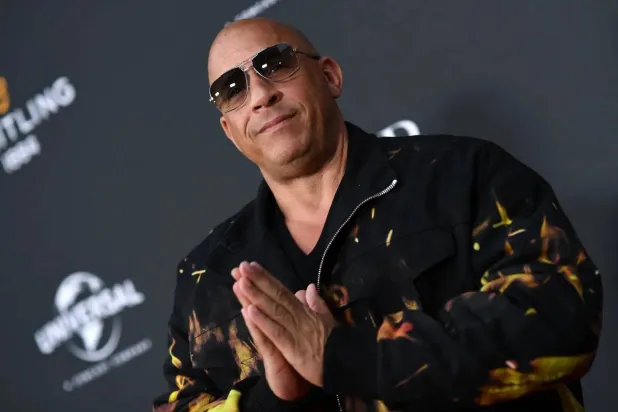
    A television series based on the blockbuster “Fast & Furious” movie franchise is being developed for the Peacock streaming service, NBCUniversal said on Monday. Vin Diesel, who plays Dominic Toretto in the films, announced that the series was coming to the small screen at a presentation to advertisers at Radio City Music Hall.

    At the event, Diesel said four TV shows were in the works. An NBCUniversal press release ‌distributed later ‌in the day listed only one “Fast & Furious” show ‌in ⁠development.

    The actor said ⁠he was initially hesitant to commit to sequels for “Fast & Furious,” fearing that continuing the story about a group of street racers might prevent the original film from ever being considered a classic.

    That concern has since been put to rest: this Wednesday, the Cannes Film Festival will mark the high-speed franchise’s 25th anniversary ⁠with a midnight screening, honoring it as ‌a classic.

    Diesel will attend the ‌Cannes screening alongside several of his co-stars from the films.

    Since the first “Fast & ‌Furious” movie in 2001, the 11 films in the series ‌have brought in more than $7 billion at global box offices.

    The celebration of the franchise extends well beyond the screen. A new “Fast & Furious” roller coaster is set to open at Universal Studios Hollywood this summer, ‌with another attraction planned for Universal’s Orlando theme parks.

    “For the last decade, we realized the ⁠fans want ⁠more,” Diesel said, noting that longtime viewers are eager to see the continuation of the franchise’s legacy characters and storylines.

    Diesel praised Donna Langley, chairman of NBCUniversal Entertainment & Studios and chief content officer, who oversees film and television programming.

    “I had to wait until it was right,” he said.

    “It became right when Donna Langley started to oversee it all. That’s when I knew the integrity of the characters, the international appeal, and what makes us all feel like family would be protected in the TV space,” the 58-year-old actor said.

    The final “Fast & Furious” film is scheduled to debut on March 17, 2028.

    Original Post

  • After Backlash, Mexico Cancels Plan to Cut School Year for World Cup

    After Backlash, Mexico Cancels Plan to Cut School Year for World Cup

    Mexico canceled plans to shorten its school year ahead of the World Cup after widespread backlash from parents, think tanks and local authorities, the government said Monday.

    On Friday, Education Secretary Mario Delgado unexpectedly announced the school year would end about 40 days early, on June 5, arguing the decision was also based on a heat wave.

    Education and other government officials met Monday to gather input from parents and consider options at a meeting announced by President Claudia Sheinbaum, who expressed skepticism of the proposed shortening.

    At the meeting it was agreed to keep the school calendar as originally planned and have it end July 15, with classes resuming August 31, the Education Department said.

    The World Cup tournament — hosted jointly by Mexico, the United States and Canada — kicks off on June 11 when Mexico takes on South Africa at home in Mexico City.

    “The idea is to keep the vacation period to six weeks, as it has always been, and perhaps some students will start early, while others will continue with the previous schedule,” Sheinbaum said earlier.

    “The goal is for it to be a consensus decision,” she said. “Now we need to listen.”

    Two states rejected the plan before it was ultimately canceled.

    Parents also questioned the measure, which, according to the think tank Mexico Evalua, would cause students to fall behind in their studies.

    “The decision… will reduce effective learning time even more for 23.4 million students,” Mexico Evalua wrote in a report.

    Sheinbaum also guaranteed “conditions of security” necessary for the games as well as the completion of public works projects started before the tournament, particularly additions to the Azteca stadium and the Mexico City International Airport.

    Original Post

  • Brazilian Flotilla Activist Returns Home, Alleges Torture During Israel Detention

    Brazilian Flotilla Activist Returns Home, Alleges Torture During Israel Detention

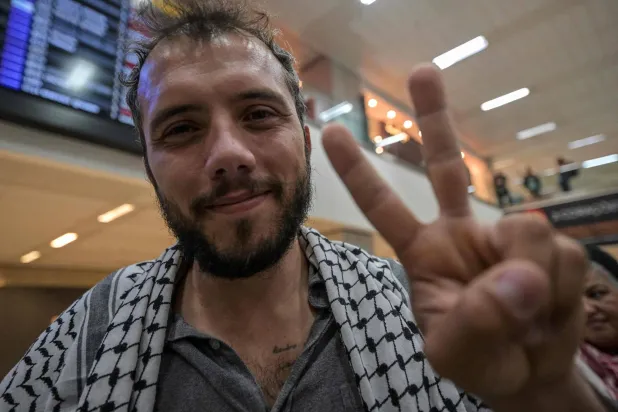
    Brazilian activist Thiago Avila returned to Sao Paulo on Monday following his detention and deportation from Israel, where he alleged he was tortured and witnessed abuses of Palestinian prisoners during 10 days in custody.

    Avila and Spanish national Abu Keshek were part of the second Global Sumud Flotilla that launched from Spain on April 12 attempting to break Israel’s blockade of Gaza ‌by delivering aid. The ‌two men were arrested and taken ‌to ⁠Israel after Israeli forces ⁠intercepted the flotilla, while more than 100 other pro-Palestinian activists were taken to Crete.

    They were held under suspicion of offences including aiding the enemy and contact with a terrorist group. Both denied the allegations. They were released on Saturday and handed to immigration authorities for deportation.

    “My return was simply a correction of a ⁠serious violation. I was kidnapped by Israel, I ‌wasn’t imprisoned,” Avila told reporters ‌after his arrival at Sao Paulo-Guarulhos International Airport.

    Avila claimed that he and ‌Abu Keshek suffered “all kinds of violations” during their detention, ‌adding that Palestinian prisoners in nearby cells experienced worse treatment.

    Israel dismissed claims by human rights group Adalah, which represented the men in a court hearing in Israel, that the men had been tortured ‌in custody, and said all measures taken were in accordance with the law.

    The governments of ⁠Spain and ⁠Brazil have said the detention was unlawful.

    “We need to defeat (Israeli Prime Minister) Netanyahu and (US President) Donald Trump, we need to defeat the war criminals,” Avila said as supporters held signs calling for Brazil to cut ties with Israel.

    Gaza is largely run by Palestinian group Hamas, which is designated as a terrorist group by Israel and much of the West.

    The group’s October 7, 2023, attack on Israel started the Gaza war that has left much of the enclave’s population homeless and dependent on aid – that humanitarian agencies say is arriving too slowly.

    Original Post

  • The ‘Patriotism’ of Hezbollah as the Perfect Antithesis of Patriotism

    The Dutch-American political scientist Arend Lijphart developed what he called “consociational democracy,” a democratic system in which the leaders of prominent social communities share power in order to ensure that no single group dominates the others.

    Accordingly, consociational democracy has been presented as a governance model for societies whose stability emanates from cooperation among the elites of its various communities rather than from majority rule. Its defining features include the formation of broad coalitions among community leaders, each community’s right to a veto over decisions it considers a threat to its interests, a sensible distribution of political power and resources, and a degree of autonomy or self-governance for each community.

    The Netherlands was Lijphart’s original model. It was a society split into several “pillars”: Catholic, Protestant, socialist, and liberal. Each pillar had its own schools, media, and organizations; at the top, however, the elites of each pillar worked together. Lebanon was a key case study of consociationalism of Lijphart’s, alongside Belgium, Switzerland, and of course, the Netherlands, as well as less complete cases such as Malaysia, Cyprus, and Canada. Later, other scholars added Bosnia, post-2003 Iraq, and South Africa during its transition.

    This theory has faced and continues to face criticism. However, its fundamental assumption is its most compelling idea: distinguishing between cases where consensus is limited, and there are many subcultures, which demand some sort of consociational arrangement, and cases of broad consensus and few subcultures, where majority rule can function more straightforwardly. Lebanon is not the only country in our region that falls into the first category, though it is the most conspicuous.

    On the other hand, there is no doubt that one of the surest ways to undercut this “consociation” is for one component of a divided society to wage a foreign conflict that the other components, for whatever reason, have not endorsed. The decision to declare neutrality for Switzerland at the Congress of Vienna in 1815, which reshaped Europe after the Napoleonic Wars, was implicitly partly driven by the fact that the country is home to several national communities, each of which is an extension of a neighboring country: France, Germany, and Italy. Accordingly, very little daylight separates embroiling the country in foreign conflicts from civil war, rendering neutrality a fundamental need and a national doctrine for a people who chose not to be an outpost of their neighbors.

    Despite the criticisms, some well-founded, of how consociationalism has been practiced in Lebanon, the architects of the Lebanese system were always mindful of this need, and this was reflected by the fact that both Beshara al-Khoury and Riad al-Solh’s names have been coupled with the independence of 1943.

    Nothing did more to hinder addressing the grievances of Muslim communities than prioritizing foreign alignments, first with Nasserism and then the Palestinian revolution. When these tensions, in the mid-1970s, morphed into a long and bitter war that did not end until the late 1980s, much of those grievances were addressed by the Taif Accord that improved the terms of the consociational framework.

    It is no exaggeration to say that today, Hezbollah’s arms are the single biggest impediment to the emergence of any form of consensus. These arms aggravate fears and replace the trust that should prevail among citizens of what is supposed to be a single country with mutual suspicion, and they push the country into foreign wars that make consensus all but impossible. That much can be said before getting into how the anguish of displacement, an extension of the war, is fodder for latent civil conflicts.

    The fact that consensus, in the Lebanese case, is the ultimate requisite for any viable form of patriotism renders ascribing patriotism to Hezbollah and its war, as some have, wholly untenable. Indeed, they become a textbook case of patriotism’s antithesis. A war that at least two-thirds of the Lebanese do not believe in and had been dragged into cannot also be “patriotic,” nor can disregard for the elected institutions that have banned the party’s weapons – to say nothing of Hezbollah’s ties to Iran and its Revolutionary Guard that the party itself does not deny.

    Three interlinked premises underpin the argument that the party and its war are “patriotic.” The first is an implicit definition of the nation that ignores the pluralistic nature of its society and the sub-cultures of its communities, presenting the country’s divisions as a split between “right” and “left” or “dignity” and “humiliation.” The second is branding a large majority of the population traitors and slandering them for rejecting a fateful choice made by a small minority and imposed by force of arms. The third is a definition of patriotism founded not on consensus, but on dominating and subjugating “the enemies of the people.”

    Here, the definition of patriotism is flipped on its head; it is determined on the basis of one’s hostility toward some foreign actor – “patriotism is hostility to imperialism and Zionism” – rather than the extent to which one complies with and develops national consensus. This definition is not, of course, subject to consulting the various communities’ views; rather, it brands those who demand such consultation as traitors.

    These qualities, since they add authoritarianism and misrepresentation to this anti-patriotism, threaten, through perpetual war and the staggering human and economic costs that come with it, to drive the majority of the population toward a civil conflict that would destroy any notion of a nationhood and sense of national identity. That is precisely what is happening in Lebanon today.

    Original Post
  • Spurs Draw with Leeds for Priceless Point in Premier League Survival Fight

    Spurs Draw with Leeds for Priceless Point in Premier League Survival Fight

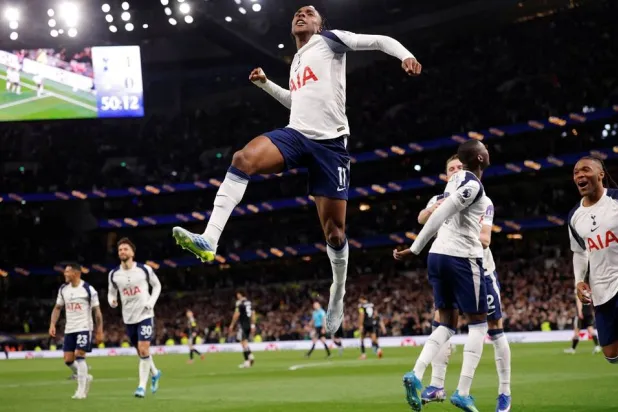
    Tottenham Hotspur took a small and potentially crucial step toward retaining its Premier League status after drawing at home with Leeds United 1-1 on Monday.

    Spurs, just above the drop zone, moved two points clear of relegation rival West Ham.

    Tottenham went ahead in the 50th minute on Mathys Tels’ strike.

    However, Tels’ foul on Ethan Ampadu with 15 minutes left led to a Leeds penalty that was converted by Dominic Calvert-Lewin.

    Spurs takes on Chelsea away and Everton at home in their last two games, while West Ham is away at Newcastle before facing Leeds at home on the final day of the season.

    One of the two teams will join the already relegated Burnley and Wolves in next season’s Championship.

    Spurs went into the game on a high after two consecutive victories, but though they dominated the first half in terms of possession and shots on goal, they didn’t break the deadlock until five minutes into the second half.

    Pedro Porro’s corner kick was cleared to an unmarked Tels, who coolly struck into the far corner of the net from 20 meters out. It was the center forward’s first goal since Jan. 7.

    Tels turned villain 24 minutes later when his high foot was adjudged to have made contact with Ethan Ampadu’s head.

    The referee pointed to the spot and Calvert-Lewin, who was denied a first-half penalty after a video review, confidently dispatched the spot kick.

    In an edgy last few moments and a remarkable 15 minutes of added time there were no more goals. Spurs will content themselves that their destiny remains in their hands.

    “We played a good game but there was big pressure,” Tottenham coach Roberto De Zerbi said. “We didn’t play calmly. We wanted to win immediately without passes. When you are fighting for relegation you can’t play every game calmly.

    “Leeds played a good game and we hope they play like that against West Ham in the next game.”

    Spurs have taken eight out of a possible 12 points since De Zerbi’s debut defeat at Sunderland on April 12.

    “We deserve to stay up,” he said. “We will fight until the end… Even if we had won today, it wouldn’t have been finished yet.”

    Hull secures playoff spot

    Hull will play Southampton or Middlesbrough in the Championship playoff final after second half goals from Mo Belloumi and Joe Gelhardt gave it a 2-0 win over Millwall in London.

    Belloumi’s 64th-minute strike with his left foot broke the deadlock in the second game of the two-leg affair and Gelhardt made sure with a low shot that squirmed past the Millwall goalkeeper.

    The win means Hull have one match to secure a place in the Premier League for the first time since it was relegated in 2017.

    Southampton and Middlesbrough drew the first leg 0-0 on Saturday and will play their return tie on Tuesday.

    The playoff final is set for Wembley on May 23.

    Original Post