Author: Asharq Al-awsat Staff

  • Shipping Industry Fears Fuel Shortages as Iran War Squeezes Bunker Fuel Supply

    Shipping Industry Fears Fuel Shortages as Iran War Squeezes Bunker Fuel Supply

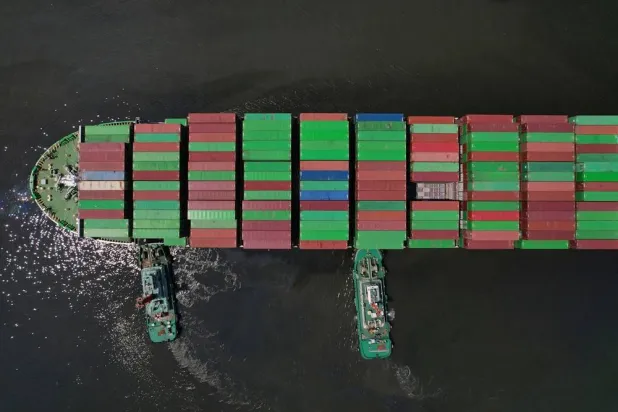
    Ship operators rely on a sludgelike substance known as bunker fuel to keep vessels running. The Iran war’s closure of the Strait of Hormuz has choked off the supply of this fuel that powers the global maritime industry and its largest refueling hub in Asia.

    Bunker fuel is a literal bottom of the barrel product — heavier and dirtier than the more expensive kinds of refined crude oil used by other vehicles like cars and airplanes — it sinks to the bottom of storage containers.

    But it helps move the 80% of globally traded goods that are transported by sea, and experts say that means a shortage of bunker fuel will translate to higher shipping costs, increase consumer prices and hurt the bottom lines of businesses worldwide.

    That will be an issue first in Asia, which relies heavily on Middle Eastern oil. In Singapore, the world’s biggest refueling hub for bunker fuel, reserves are dwindling and prices are spiking.

    Shipping companies are trying to adapt to the energy shock, reducing vessel speeds and revising schedules to cut costs in the short term while making plans to acquire ships that can run on alternative fuels.

    But some companies won’t survive this triage for long, according to Henning Gloystein of the Eurasia Group consultancy firm, who warned that the pain will spread beyond Asia through global supply chains.

    Southeast Asia turns to ‘energy triage’

    Asia, which was hit first and hardest by the energy shock, has adopted various forms of “energy triage ” to cope, increasing its use of coal, buying more crude oil from Russia and reviving plans to develop nuclear power.

    But Asia is bracing for further impacts as energy reserves dwindle and government subsidies dry up.

    More than half of global seaborne trade moved through Asian ports in 2024, according to United Nations data, so what happens there will have global consequences.

    For now, Singapore’s supplies of bunker fuel have held up even as the price races up.

    But the prolonged cutoff from major sources of the heavier crude oil needed for bunker fuel, like Iraq and Kuwait, will cause shortages, said Natalia Katona of the commodity site OilPrice.

    “We just see the price in Singapore going up, up, up,” Katona said.

    Before the war, bunker fuel in Singapore cost about $500 per metric ton ($450 per US ton). That went up to more than $800 ($725 per US ton) as of early May.

    Fuel shortages drive consumer costs Shipping companies are absorbing the brunt of the costs for now, said June Goh, an oil analyst for market intelligence firm Sparta Commodities, but this may soon “pass on to the customers.”

    The daily cost of the Iran war for the global shipping industry is 340 million euros (nearly $400 million), according to the European Federation for Transport and Environment.

    “Bunker fuel shortages tend to feed through to shipping costs more quickly than many other cost pressures,” said Oliver Miloschewsky of risk consultancy firm Aon.

    Individual product impact may appear incremental but the cumulative effect of higher shipping costs “can ripple across supply chains and ultimately influence consumer prices across a broad range of sectors,” he said.

    Singaporean consumers are also feeling the pinch in other ways as local ferries increase fares and luxury cruise liners tack on fuel surcharges.

    Ship operators face limited options

    Shippers have limited choices to deal with the situation, Miloschewsky said. They can pay more for fuel or implement fuel-saving measures like slowing shipping or suspending voyages.

    The average speed of bulk carriers and container ships has slowed globally by around 2% since the war began on Feb. 28, industry group Clarksons Research reported.

    High prices are also driving more interest in green fuels, said Håkan Agnevall of marine and energy technology manufacturer Wartsila.

    The good news is the technology to create lower-emitting fuels exists, he said. The bad news is production isn’t yet at scale and greener fuels are often more expensive.

    Though US President Donald Trump derailed efforts to shift global shipping away from fossil fuels in 2025, Agnevall said the current conflict could prompt strategically minded companies and countries to renew their push toward greener alternatives.

    Rising fossil fuel prices are narrowing the cost gap. “That improves the business case for green fuels,” he said.

    The Caravel Group owns one of the world’s largest ship management companies, Fleet Management Limited, which oversees more than 120 shipbuilding projects.

    About a third of ships that the company is managing the construction of will be “dual fuel capable,” meaning they can run on both conventional bunker fuel and alternatives such as liquified natural gas, CEO Angad Banga told The Associated Press.

    Ship owners are willing to pay a premium to have vessels that can switch between fuels because “in a volatile environment optionality has a measurable economic value,” he said.

    Alternative fuels are not yet as flexible as conventional fuel bunkering, Banga said. While there are more than 890 LNG-fueled vessels in operation globally, a lack of supporting infrastructure has created bottlenecks for them.

    But the industry is catching up and limits on bunker fuel are driving even more interest in LNG-capable ships, he said, “that progress is real.”

    Original Post

  • Have We Moved from Epic War to Local War?

    In two important statements, US Secretary of State and National Security Adviser Marco Rubio said that the battle of the Operation Epic Fury had ended and achieved its objectives. As for the developments that followed the ceasefire, President Donald Trump said that the Iranians “messed with us today and we crushed them.” He said they “trifled” and that the whole thing is not worth dwelling on.

    Does this mean America has now achieved its mission and that we have entered the day after the epic war? Or was it merely a psychological withdrawal from the scene, with the weapons and military hardware still in place and an explosion possible at any moment? And why this position, at least at the rhetorical level? Is the aim to ensure a peaceful climate for the World Cup that the United States is hosting alongside Canada and Mexico? Or does it reflect fears of a shift in American public opinion that could cost the Republicans in the Midterms and deprive them of control over both the Senate and the House?

    Wars generally end either with a political settlement or the collapse of one of the parties. So what is happening exactly? What happens if the US leaves the Middle East mired in a war with no end in sight? Why is the US behaving this way? Is it the World Cup that begins in a month, the midterm elections in November, or both? Or is it simply down to President Trump’s “transactional politics” and the politics of deals?

    It is perhaps a mix of all these factors. Trump administrations, as we have seen over two terms, do not pursue long-term strategic foreign policy projects, preferring a series of temporary deals because they believe that long term outcomes are an accumulation of short-term phases, each of which must produce a direct and rapid return.

    With this mindset, the war becomes a tool to exert pressure rather than a project for reshaping the region. Here, Trump’s vision diverges from Netanyahu’s. The latter wants to change the face of the Middle East. Ending the war, therefore, becomes more important than a decisive victory. Total victory requires time, money, and a long-term commitment that Washington wants to avoid at this stage and that does not align with President Trump’s governing approach. Trump is the real actor in this war; or, to be fair, Trump and the market are.

    This shift in rhetoric, from both the president and his secretary of state and national security adviser, show that Washington may no longer be bent on achieving a historic victory. It now seeks to avoid being bogged down in a new Middle Eastern quagmire like those of Iraq or Afghanistan. It seems to be saying: we carried out this punitive mission, and that is the end of it; managing the day after is the responsibility of the region.

    The problem of the Strait of Hormuz remains. Contrary to what some believe, it actually boosts American oil and gas. Yes, closing the strait hurts the global market and the broader global economy, but its direct impact on the American treasury is decidedly positive and symbolically advantageous.

    Nonetheless, the prestige of the great powers that shape the balance of power in the region and the world still matters. The problem is that the Middle East cannot tolerate a vacuum. If the major power withdraws before reaching a real political settlement, regional powers quickly find themselves managing open-ended conflicts waged through local proxies. That is precisely what makes “local war” so dangerous: it continues because the regional actors have their own reasons for perpetuating it and the major powers lack the will to bring it to an end.

    Current indications suggest that this is a highly probable outcome. Israel does not appear prepared to return to the prewar status quo, Iran cannot behave as though nothing had happened, and the Gulf states could once again find themselves hostages to geography.

    Here lies the real concern: the US may have ended its “great epic,” but in doing so, it could leave behind a Middle East of small wars with no end in sight.

    Original Post

  • The Wave of Treason Accusations, Escalating Rhetoric, and the Repercussions for Lebanon

    As Hezbollah escalates rhetorically and raises the stakes, there is a need to examine the wave of treason accusations and verbal escalation it has directed at the Lebanese presidency, the premiership, and the Maronite religious establishment. At first glance, this virulence seems a purely domestic matter. In fact, however, it is tied to sweeping regional swifts. Lebanon stands on a fault line between two paths: the path of sustainable peace and the path of resistance and endless cycles of war.

    Why this escalation? It cannot be understood without taking a moment to consider a number of domestic factors. The first concerns the nature of Hezbollah’s political project itself. The idea of direct negotiations with Israel (or even of lasting peace) is not merely a political alternative; it undermines at the essence of the narrative that the “resistance” has been built for decades. The transition from the logic of “open-ended conflict” to that of a “stable settlement” would strip the resistance discourse and its proponents of legitimacy. Accordingly, its escalation is a response to an existential threat to its entire model, not a fleeting reaction.

    The second factor is the transformation of the state’s leadership. Since the era of Syrian hegemony and the years that followed, the party had grown accustomed to having the final say on questions around, leveraging domestic alliances that provided it with political cover, notably when Michel Aoun provided it with a large Christian umbrella. Today, with the Lebanese authorities seeking to restore institutional logic, its monopoly over decision-making can no longer be taken for granted. The escalation, therefore, reflects Hezbollah’s refusal to accept this new equation and its attempt to reestablish its influence. We should not overlook the circumstances surrounding Joseph Aoun’s accession to the presidency following the regional earthquake triggered by the response to the “Al-Aqsa Flood” operation and the subsequent regional shifts that have changed the balance of power and overturned the equation since, including the push to end clamp down on nonstate actors.

    The third factor is the struggle over the right of representation. When the state approaches a sovereign decision such as negotiations, the question remerges: who has the authority to define the national interest? Attacks on the presidency and the premiership seek to redraw the boundaries of legitimacy and institutional authority. The party does not appear ready to accept the authority of constitutional institutions without gains that would redistribute the balance of power within the Lebanese political system. As for the targeting of the Christian religious authority, this is intended to move the dispute from the technical-political field to that of identity, ensuring that the debate over Lebanon’s choices becomes a debate over Lebanon’s very definition.

    This shift is no trivial matter. It opens a dangerous door and turns political disagreement into a combustible social crisis. Is the aim, then, to push the country toward implosion? It would be more accurate to say the opposite. Hezbollah is taking a calibrated approach to leave Lebanon on the brink with no actual intention to fall into the abyss. The goal is to deter the authorities from going too far in these negotiations and to test the other side’s capacity to mobilize popular support. If limited frictions break out, they can be politically exploited; if they do not, the message would have been delivered at low cost. In this game of brinkmanship, tensions are leveraged as a tool rather than an end in themselves, and obstruction is always an option whenever outright dominance proves elusive.

    In this context, the objective is not to break institutions but to domesticate them and prevent negotiations from evolving into an independent process that imposes changes that can no longer be controlled later on.

    The regional dimension remains the most influential factor in containing things. Domestic escalation cannot be understood solely as a Lebanese conflict. It is a manifestation of ambiguity surrounding American-Iranian relations. Since Trump announced the end of military operations against Iran without an agreement, the region has been a gray zone: neither a decisive war nor a completed settlement. This leaves fragile arenas such as Lebanon exposed to open-ended competition. Hence Israel’s assassination of the commander Ali Ballout in Beirut’s southern suburbs despite the truce. Washington’s position creates a vacuum of authority and pushes local actors to redraw their own red lines, turning escalation into a message to the domestic arena: any process that ignores existing balances of power will remain untenable. It also sends a message to external actors: no arrangement that disregards this calculus will ever be consolidated.

    The United States’ ambiguity coincides with Israel’s drive to impose new facts on the ground in the south, placing Lebanon in a difficult position: mounting military pressure on one hand and an uncertain negotiating track on the other. Caught between the two, the domestic arena withers and becomes increasingly susceptible to home to efforts to apply pressure on rivals.

    This trajectory is not dangerous because it raises the specter of an implosion, but because it normalizes controlled tension. When a country is managed on the edge of the cliff, the exception becomes the rule, and the boundaries between politics and security (and between the state and its parallel bodies) begin to dissolve. Over time, the problem begins to move beyond periodic rounds of escalation and leaves the country permanently on the edge of sectarian strife, gradually waning.

    Original Post

  • The Russian Guide and the Beijing Summit

    The pains of the day gather in the night. The keeper of the seals sits alone. With exhaustion. With the mirror. With history. “Victory Day,” celebrations of Nazism’s defeat, were underwhelming. The attendance of foreign signatures was not befitting of Russia. He did not feel the powerful’s exhilaration nor the awe of the celebrations. He struggled to hide his disappointment. How he longed to announce an overwhelming victory over Ukraine that day. It had betrayed Russia’s embrace and its Soviet past. How he longed to announce that the reckless president of that state would be arriving the next day to surrender and publicly repent for attempting to stab the motherland in the back. But that was not possible.

    Anger seeps through his veins. It is no small matter for Russia to scale down its “Victory Day” parade for fear of a former actor named Zelensky’s drone threats. The tsar needed the master of the White House to intervene and secure the parade by mediating a brief truce. During the parade he looked at his generals, at the clusters of medals hanging from their chests. The odor of his disappointment filled the air. What use are all these medals if an actor’s drones keep Moscow awake at night? It was as though Russia’s splendor had come to an end. Its generals shine at lavish banquets, not the battlefield. Comrades from North Korea took part in the parade. He has not forgotten that Kim Jong Un rescued the Russian army during its harshest battles in Ukraine. The Russian army also relied on thousands of mercenaries from Colombia, Africa, and the Arab world, a bitter stain on the history of the “Red Army.”

    The past few months have been especially brutal. Donald Trump sent his bombers and Iranian nuclear facilities were pounded. Israeli fighter jets roamed Tehran’s skies like they had been on an excursion. The year began painfully too. Trump dispatched elite units who seized “Comrade” Nicolas Maduro and brought him before an American court like Noriega or Escobar. His “strategic partnership” with Russia did not save him. Castro’s country is shaking in the agony of economic failure according to reports, and it can not avoid publicly admitting defeat and surrendering to geographical destiny for much longer.

    There are many painful scenes. Israeli aircraft decimated Iran’s leadership, foremost among them the Supreme Leader himself. American planes rained bombs on the barracks and the prestige of the IRGC. Iran set off the Strait of Hormuz detonator, but the fleets of the “Great Satan” have surrounded its ports and strangled its economy.

    Russia cannot risk confronting the American machine. Its strategic partnership with Iran will go no further than smuggling spare parts to allow Iran to replenish its drone arsenal. Besides, Russia needs the tweeting master of the White House to arrange the “Victory Day” truce and help find a way out of the Ukrainian swamp.

    He understands his advisers, assistants, and flatterers. They have no interest in unsettling the decision-maker or provoking him. Their fate hinges on his mood. They sugarcoat death and cover the thorns with velvet. But the tsar knows. Rising oil prices do not change the fact that his country’s economy is not in great shape, nor that the war has dragged on and that its agon has entered many homes.

    Fortunately for him, the regime can keep the mothers of fallen soldiers from weeping on television screens. It criminalizes skepticism of the war or its objectives. True, he is not the president of America, forced to live in fear of newspaper headlines and the flames of social media. Russian media, like its security, is tightly controlled . But even that is not enough.

    The war in Ukraine has dragged on and will soon outlast the Second World War. Every day coffins return from Ukraine wrapped in the Russian flag, as though the flag’s only remaining function were to cover coffins.

    The tsar knows. For the first time since his rise to power at the start of the century, his popularity is slipping in the polls, even if it remains far higher than Trump’s. That is why he tried to offer a glimmer of hope, saying the war was nearing its end. Sometimes it occurs to him that he had entered the Kremlin to restore Russia’s greatness just as Trump entered the White House to make America great again.

    That week will not spare him from the painful scenes. The world’s attention will turn to Xi Jinping and his guest Donald Trump. The talks will certainly not be easy. The global economy has been hit with the radiation of the Strait of Hormuz, and market fears have risen to unprecedented levels. Both presidents have many concerns and profound disagreements. On the table lie the troubled international economy, supply chains, tariffs, rare earth minerals, artificial intelligence, chips, and the feverish technological race, to say nothing about Taiwan. Fortunately for the world, the Chinese emperor has not dealt with “treacherous” Taiwan the way the Russian tsar has dealt with Ukraine. The question is whether Trump can satisfy Xi enough to use the Chinese key to unlock the Strait of Hormuz.

    Vladimir the Great knows that the Chinese president now sits in the seat once reserved for Leonid Brezhnev. Newspapers will write of the global powers’ summit and how the fate of the world hangs in the balance, just as they had once written the same about Soviet-American summits. They will also write that the summit will merely manage their competition for first place and seek to prevent dangerous escalation. The contest for world leadership will remain between Washington and Beijing. Some will not hesitate to write that the best Trump can achieve is merely to delay the emergence of the “Chinese era.”

    Putin boasts of a “friendship without limits” that ties him to the man on Mao Zedong’s throne. But the term “Chinese century” gives him pause when he reflects on his country’s geographic destiny. A technological and human flood. He thinks of something else.

    Has the Russian Supreme Leader been wounded in the Ukrainian war? This question torments him. He looks in the mirror, trying to blame his age, smelling the autumn. But Xi was born only a year after him, and Trump was born six years before him. He has the sense that Russia itself has also been wounded. The wheel of time turns. From now on, Russian may have to content itself with playing in the second division.

    Original Post