Sudan’s Rapid Support Forces (RSF) are facing a growing wave of defections, raising questions over the future of the paramilitary group’s military cohesion and tribal alliances as the conflict with the Sudanese army enters its fourth year and turns into a prolonged war of attrition.
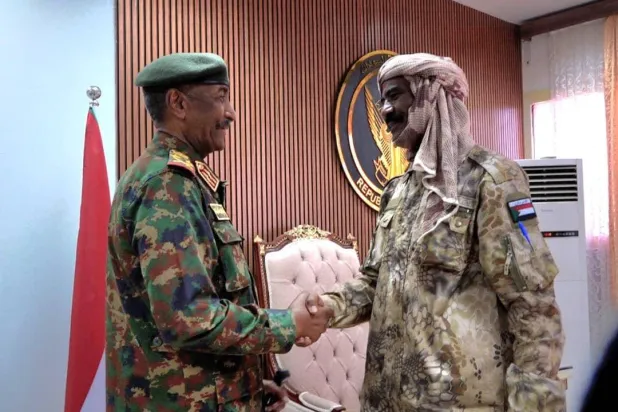
The latest and most prominent defection came from senior field commander Ali Rizqallah, known as “Al-Safana,” one of the RSF’s leading battlefield commanders in Darfur and Kordofan.
His departure follows a series of similar moves in recent months, including the defection of Major General Al-Nour Ahmed Adam, known as “Al-Nour Al-Qubba,” and field commander Bishara Al-Huwaira, who left RSF ranks in North Kordofan weeks ago. Before them, Abu Aqla Keikel, commander of the Sudan Shield Forces, became one of the first high-profile defectors in late 2024.
Observers say Al-Huwaira’s defection carries particular military significance because of his position in the Bara area near El-Obeid, the Sudanese army’s main stronghold in North Kordofan. The area is a strategic junction linking western Sudan with the east and center of the country and serves as a key corridor for supplies, fuel and fighters.
Local reports said Al-Huwaira joined the Sudanese army with a force of between 11 and 15 fully equipped combat vehicles, in what was seen as another blow to the RSF despite efforts by its leadership to downplay the impact.
After Al-Nour Al-Qubba defected in April, there was speculation that Al-Safana would be the next commander to leave, especially after reports emerged that he had withdrawn from the battlefield and traveled abroad. He later appeared in a video denying those reports before formally announcing his defection weeks later.
Sources said Al-Safana had left the frontlines for Uganda before traveling to India for medical treatment. He later appeared in a video from an undisclosed location believed to be in India, announcing he had left the RSF.
Although Al-Safana said he was not aligning himself with any armed faction, sources close to the Sudanese army expect him to formally join the military. RSF sources, meanwhile, insisted that the move posed no real threat to the force or to the “Sudan Founding Alliance” project run by the RSF in areas under its control.
RSF leaders say the departure of some commanders has not altered the balance of power on the ground, stressing the group still controls territories it captured during the war and that field units linked to those commanders continue to fight under its banner.
But analysts say the defections carry significance beyond their immediate military effect because of the RSF’s structure, which relies heavily on tribal loyalties, local alliances and influential field commanders, particularly in Darfur.
Unlike conventional armies with centralized command structures, the RSF has relied since its inception on tribal alliances and armed groups with overlapping loyalties. While that structure helped it expand rapidly, it also left it vulnerable to internal divisions and shifting allegiances as the war dragged on.
Analysts also attribute the defections to growing tensions within the RSF leadership, where commander Mohamed Hamdan Dagalo, known as Hemedti, and his brother Abdel Rahim Dagalo control military decision-making, reportedly sidelining some field commanders.
While the defections are unlikely to immediately shift the military balance, observers say they could deepen internal instability within the RSF and gradually weaken its military and tribal cohesion.