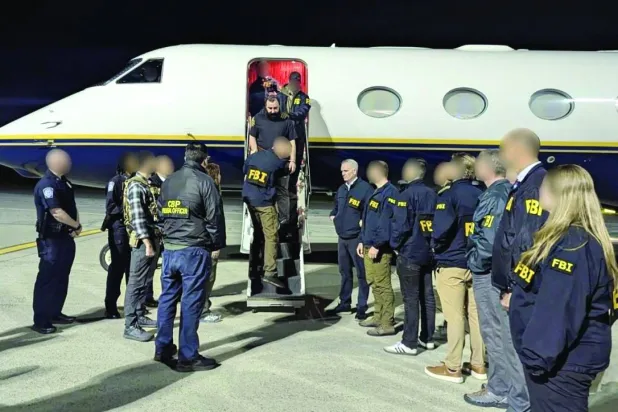
The arrest by the US authorities of Kataib Hezbollah figure Mohammed Baqer al-Saadi has drawn renewed attention to the faction’s role in cross-border operations. Many viewed it as the start of tougher US measures against individuals and figures linked to the Quds Force, the regional arm of Iran’s Revolutionary Guards, and what is known as the “Axis of Resistance.”
Because of the highly secretive environment in which Kataib Hezbollah has operated since it was founded by Abu Mahdi al-Muhandis – the former deputy head of Iraq’s Popular Mobilization Forces, who was killed in a US strike in 2020 – soon after the 2003 overthrow of late president Saddam Hussein, ambiguity and scarce information surround most of the group’s senior figures.
That secrecy is reinforced by their reluctance to appear in public, despite the faction’s local influence as one of the groups closest and most closely linked to the Revolutionary Guards.
Link to the Quds Force
Information obtained by Asharq Al-Awsat from factional sources indicates that al-Saadi had close ties to the Quds Force intelligence body. It also suggests he had close ties to a member of that Iranian body who was killed during the 11-day war between the United States and Iran, although some sources said he “liked to claim such ties.”
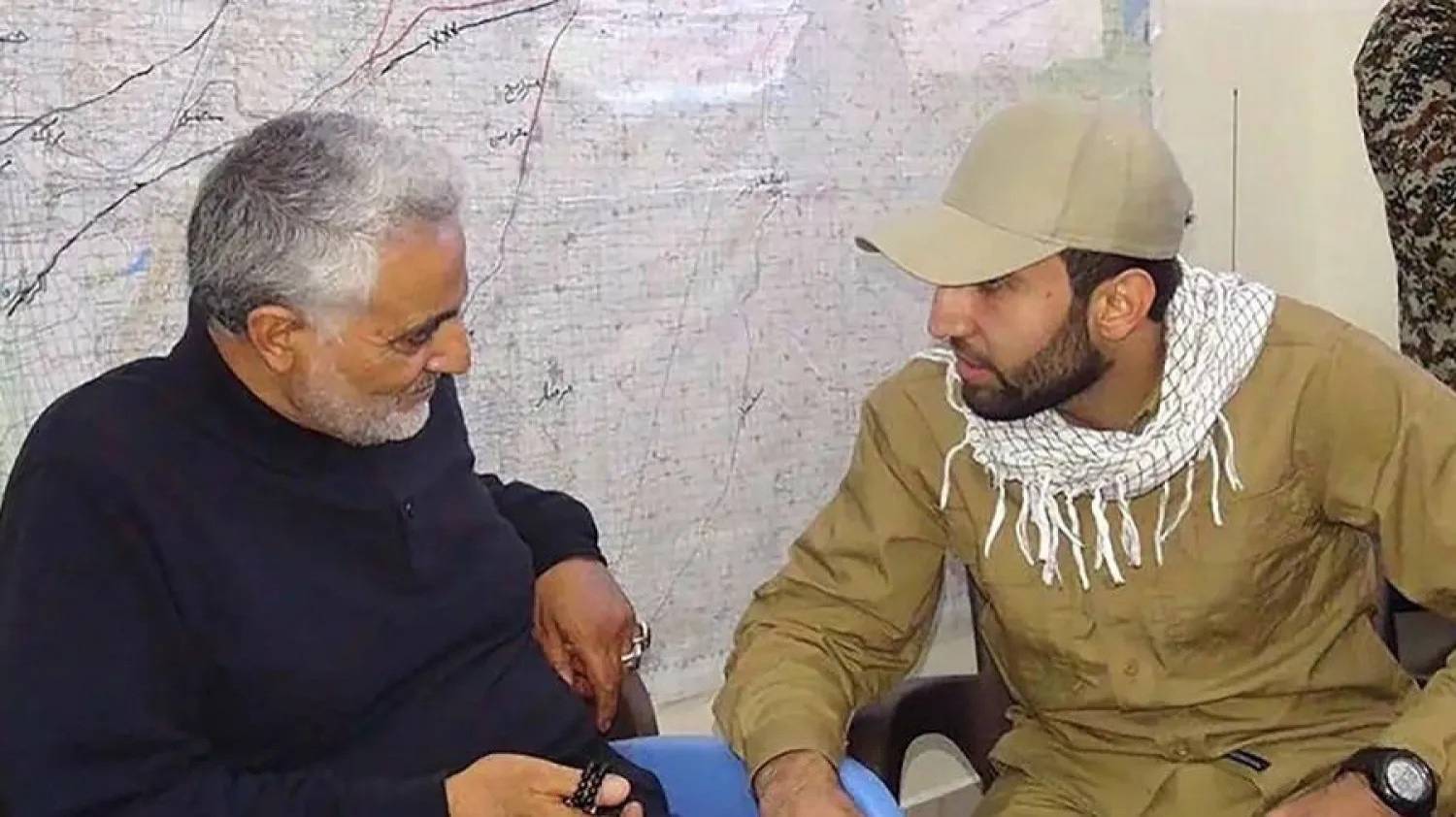
A review of his photo archive on X, where al-Saadi has been active since 2014, shows that he often appeared alongside Revolutionary Guards commanders. In one video clip, he appeared to exchange words and smiles with the late Iranian President Ebrahim Raisi.
According to the factional sources, al-Saadi “stepped up his visits to Lebanon after the killing of Lebanese Hezbollah leader Hassan Nasrallah in late September 2024, and was also active in moving between Lebanon and Syria during Bashar al-Assad’s rule.”
Sources said al-Saadi’s possession of a “service passport,” usually granted to senior military figures and official personnel, “gave him flexibility to move and travel to other countries.”
From this perspective, the sources explained his latest trip to Türkiye, where he was reportedly caught and arrested. It was also rumored that he was preparing to travel to a European country.
Al-Saadi appeared in more than one circulated photograph with former Iranian Quds Force commander Qassem Soleimani and other figures linked to armed factions and the Revolutionary Guards. Some sources said he preferred to add “Soleimani” to his name.
How was al-Saadi arrested?
According to most Western sources that reported al-Saadi’s arrest in Türkiye and transfer to the United States, he is accused of coordinating and planning at least 18 terrorist attacks in Europe targeting Americans and Jews, all in the name of ending the war in Iran.
After his arrest, al-Saadi appeared in a video message to his mother on a mobile phone screen, urging her to “be patient” and saying they “will not be broken.”
Western sources say he “directed and urged” others to attack US and Israeli interests in retaliation for the war Washington and Tel Aviv are waging against Tehran.
Al-Saadi is also accused of coordinating two additional attacks in Canada, directing others, and attempting to coordinate terrorist attacks inside the United States, including against a synagogue in New York City, according to prosecutors.
The US lists Kataib Hezbollah as a foreign terrorist organization and says al-Saadi has been involved with the group since 2017. Some sources say his father is linked to the Badr Organization, led by Hadi al-Amiri.
Last month, Washington offered a $10 million reward for information on Kataib Hezbollah leader Abu Hussein al-Hamidawi.
CNN had reported a link between Kataib Hezbollah and the group that claimed responsibility for a series of arson attacks targeting Jewish sites across Europe, including synagogues, schools and ambulances.
Al-Saadi faces several charges, including conspiracy to provide material support to a foreign terrorist organization, conspiracy to provide material support for terrorist acts, and conspiracy to bomb a public place.
He appeared in court on Friday in the Southern District of New York, where a judge ordered him detained without bail. He did not enter a plea during the hearing.
The potential repercussions of al-Saadi’s arrest for Kataib Hezbollah remain unclear, as does the nature of the information US agencies may obtain from him and whether it could expose the armed group, which is now at the center of US scrutiny.
According to al-Saadi’s defense lawyer, Andrew Dalack, who spoke to Western media, he was arrested in Türkiye by Turkish authorities, most likely at Washington’s request, and handed over to US authorities without being given a chance to challenge the legality of his detention or his transfer to the United States.
Al-Saadi faces numerous allegations and accusations, including an attempt to arrange the bombing of a prominent synagogue in New York City, as well as targeting two other sites in the United States, Jewish centers in Los Angeles and Scottsdale, Arizona.
Other allegations indicate that al-Saadi agreed to pay $10,000 to carry out the attack, but insisted that it be filmed. Investigators say he insisted the attack be carried out on April 6, and when it did not happen, he sent a text message to the undercover agent the following morning asking why.
Al-Saadi’s record on X
Al-Saadi appears to have been active on X for years, where he often sharply criticized the government of Iraqi Prime Minister Mohammed Shia al-Sudani, which filed a “defamation” lawsuit against him in 2024.
In July 2020, al-Saadi posted on his account a picture of the US Capitol destroyed, alongside images of slain commanders such as Soleimani, with the phrase: “Our revenge for the martyred commanders continues. No negotiations with the occupier.”
He also uses the platform to openly declare support for Iran and the “Axis of Resistance,” and to attack their opponents.
In 2023, al-Saadi posted a screenshot from a maps application of Indian Creek Island in the US state of Florida, a small fortified residential island in Miami-Dade County known in the media as the billionaires’ bunker, where a number of businesspeople, celebrities and politicians live.
Prominent residents include Jared Kushner and his wife Ivanka Trump.