Blog

  • Planes with Hantavirus Cruise Passengers Land in the Netherlands; Hospital Quarantines 12

    Planes with Hantavirus Cruise Passengers Land in the Netherlands; Hospital Quarantines 12

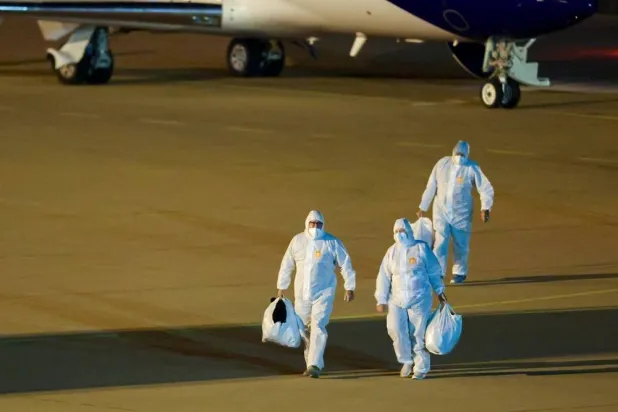
    Two planes with 28 passengers from ‌the MV Hondius cruise ship, which was hit by a hantavirus outbreak, landed in the Netherlands on Tuesday and a Dutch hospital treating a hantavirus patient quarantined 12 staffers in a preventative measure.

    The planes landed at Eindhoven Airport shortly after midnight, carrying eight Dutch nationals. Other passengers of different nationalities will continue on to their home countries from the Netherlands, authorities previously said.

    The Dutch hospital staff members were placed into preventive quarantine for six weeks after blood and urine were handled without updated and more strict protocols, the Radboudumc hospital in the city of Nijmegen ‌said, adding ‌that the infection risk is very low and patient ‌care ⁠continues uninterrupted.

    Radboudumc admitted ⁠a Hondius passenger infected with hantavirus on May 7.

    “We will carefully investigate the course of events to learn from this so that it can be prevented in the future,” said Bertine Lahuis, the chair of the hospital’s executive board.

    Meanwhile, the Hondius set sail for the Netherlands late on Monday evening with 25 crew as well as a ⁠doctor and a nurse. All passengers have disembarked the ‌ship. It is expected to arrive in ‌the Netherlands by May 17, ship owner Oceanwide Expeditions said.

    Three people – a Dutch ‌couple and a German national – have died since the start of ‌the outbreak on the ship, which is usually spread by wild rodents but can also be transmitted person-to-person in rare cases of close contact.

    The World Health Organization on Monday said there were now seven confirmed cases of the ‌Andes strain of the hantavirus and two other suspected cases – one person who died before being tested, and ⁠one on ⁠Tristan da Cunha, a remote South Atlantic island where there were no tests available.

    The confirmed cases include a French passenger, who tested positive after the ship docked in the Canary Islands on Sunday. French Prime Minister Sebastien Lecornu on Monday said the passenger was in stable condition after her health had briefly worsened.

    “Our compatriot who tested positive for Hantavirus is still in intensive care in a stable condition,” he said.

    One of 14 Spaniards quarantining at a military hospital in Madrid has tested positive for the virus, the Spanish Health Ministry said in a statement on Monday evening, adding that the patient presented no symptoms and further tests were being done before a definitive result was announced.

    Original Post

  • A Cannes Film Festival Light on Hollywood but Not Lacking in Star Power Kicks off in France

    A Cannes Film Festival Light on Hollywood but Not Lacking in Star Power Kicks off in France

    The red carpet has been rolled out at the 79th Cannes Film Festival in the South of France.

    The French Riviera festival beginning Tuesday will include 12 days of nonstop world premieres before culminating May 23 with the presentation of the Palme d’Or, the festival’s top honor and one of the film industry’s most prestigious awards.

    The festivities kick off with the opening-night film, “The Electric Kiss,” a French period-comedy, and the awarding of an honorary Palme d’Or to the “Lord of the Rings” director Peter Jackson.

    What isn’t at Cannes has been as buzzed about as much as what is. Hollywood is largely absent this year.

    While blockbusters like “Top Gun: Maverick” and “Elvis” have touched down at previous incarnations, studio films this year have been either scared away by the possibility of a rocky reception or by the high cost of flying in A-listers to the Cote d’Azur. The closest thing in Cannes’ slate is an anniversary celebration for “Fast & Furious.”

    Speaking to members of the press Monday, Cannes artistic director Thierry Frémaux said Hollywood “is reshaping” in the midst of Paramount Skydance’s proposed acquisition of Warner Bros. Discovery.

    “I hope the studio films will come back,” Frémaux said.

    Cannes has become better known for its lengthy standing ovations than its boos. This year, a long list of big-name filmmakers will have center stage.

    Among the filmmakers set to unveil new movies are Pedro Almodóvar (“Bitter Christmas”), James Gray (“Paper Tiger”), Na Hong-jin (“Hope”), Pawel Pawlikowski (“Fatherland”) and Ryusuke Hamaguchi (“All of a Sudden”).

    If Cannes has waned as a global launchpad for studio releases, it has grown as a breeding ground for Oscar contenders.

    Two years ago, Sean Baker’s “Anora” won the Palme in Cannes before winning best picture. Last year, Cannes selections like “Sentimental Value,” “The Secret Agent” and “It Was Just an Accident” went on to play prominent roles in awards season.

    More often than not, the specialty distributor Neon has been at the forefront of the Cannes-to-Oscars pipeline. Neon has backed the past six Palme d’Or winners, an unprecedented streak that it may be poised to extend. Neon is attached to more than a quarter of the 22 films in competition for the Palme d’Or.

    On Tuesday, the jury deciding that award and others will hold a news conference before beginning their sequestered movie watching. South Korean filmmaker Park Chan-wook is serving as president of the nine-member panel, along with Demi Moore, Chloé Zhao, Stellan Skarsgård and others.

    How much any of this will serve as backdrop for “The White Lotus” remains to be seen. The fourth season of Mike White’s acclaimed HBO series is based around a trip to Cannes. Last month, the show began shooting on the French Riviera.

    While Cannes may be light on big Hollywood movies, it isn’t lacking in stars. Set to appear over the next two weeks are Kristen Stewart, Barbra Streisand, Adam Driver, Javier Bardem, Michael Fassbender, Cate Blanchett, Rami Malek, Sebastian Stan, Sandra Hüller and many others.

    Original Post

  • Seven Killed in Blast in Northwest Pakistan Market

    Seven Killed in Blast in Northwest Pakistan Market

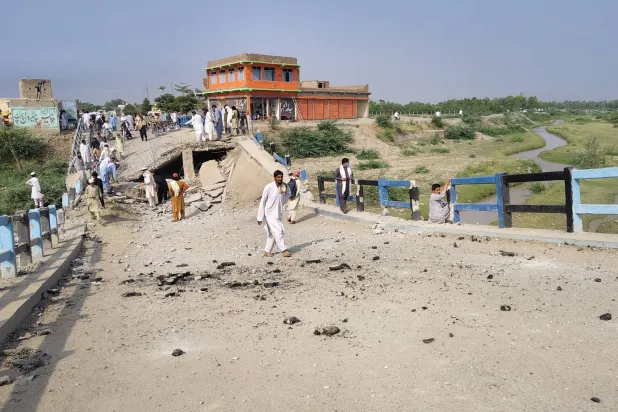
    Seven people, including two police officers and five civilians, were killed and dozens wounded in a blast at a market in north-western Pakistan on Tuesday, a senior police officer said, the second deadly attack in the region in four days.

    The bomb blast – which took place in Tehsil Sarai Nawrang Bazar near ‌Bannu district ‌on the border with Afghanistan – threatens ‌to ⁠reignite tensions between ⁠the neighbors whose militaries clashed fiercely this year, Reuters said.

    Ambulances and fire vehicles have been dispatched to the scene of the blast, the agency involved in rescue activities said in a statement.

    Those with serious injuries had been rushed ⁠to hospitals in Bannu, Deputy Superintendent of ‌Police Nawrang Saeed ‌Khan said.

    Mohammad Ishaq, the medical superintendent of THQ ‌Hospital, said they had received 37 patients so ‌far and that the condition of some of them was critical.

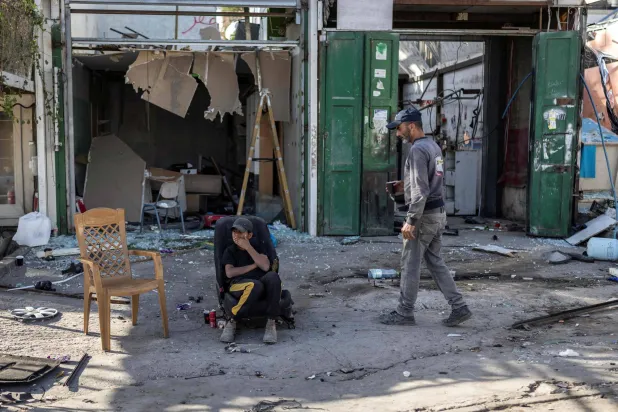
    Visuals from the scene of the blast showed damaged shopfronts and a mangled vehicle.

    A ‌car bombing followed by an ambush at a police post in ⁠the same region ⁠killed 15 police personnel on Saturday. Pakistan blamed Afghanistan-based militants for the attack and delivered a strong protest to Kabul.

    The Afghan Taliban government said on Monday it has no comment to offer immediately.

    Pakistan has blamed Kabul for harboring militants who it says use Afghan soil to plot attacks in Pakistan. The Taliban has denied the allegations and said militancy in Pakistan is an internal problem.

    Original Post

  • Shipping Industry Fears Fuel Shortages as Iran War Squeezes Bunker Fuel Supply

    Shipping Industry Fears Fuel Shortages as Iran War Squeezes Bunker Fuel Supply

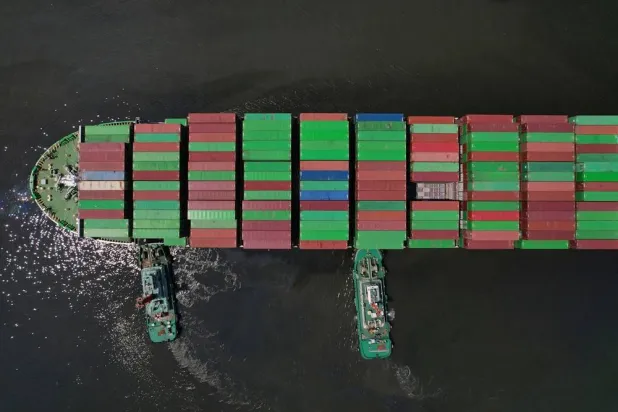
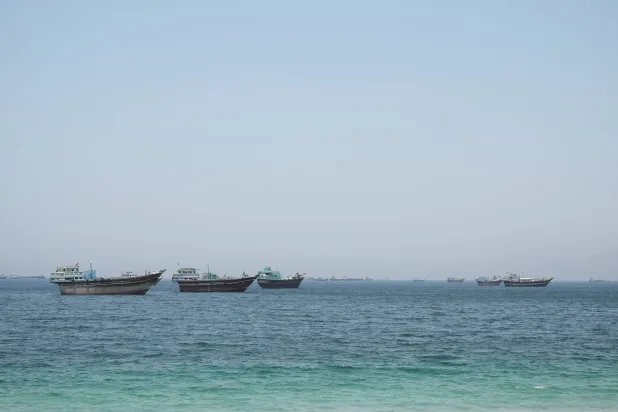
    Ship operators rely on a sludgelike substance known as bunker fuel to keep vessels running. The Iran war’s closure of the Strait of Hormuz has choked off the supply of this fuel that powers the global maritime industry and its largest refueling hub in Asia.

    Bunker fuel is a literal bottom of the barrel product — heavier and dirtier than the more expensive kinds of refined crude oil used by other vehicles like cars and airplanes — it sinks to the bottom of storage containers.

    But it helps move the 80% of globally traded goods that are transported by sea, and experts say that means a shortage of bunker fuel will translate to higher shipping costs, increase consumer prices and hurt the bottom lines of businesses worldwide.

    That will be an issue first in Asia, which relies heavily on Middle Eastern oil. In Singapore, the world’s biggest refueling hub for bunker fuel, reserves are dwindling and prices are spiking.

    Shipping companies are trying to adapt to the energy shock, reducing vessel speeds and revising schedules to cut costs in the short term while making plans to acquire ships that can run on alternative fuels.

    But some companies won’t survive this triage for long, according to Henning Gloystein of the Eurasia Group consultancy firm, who warned that the pain will spread beyond Asia through global supply chains.

    Southeast Asia turns to ‘energy triage’

    Asia, which was hit first and hardest by the energy shock, has adopted various forms of “energy triage ” to cope, increasing its use of coal, buying more crude oil from Russia and reviving plans to develop nuclear power.

    But Asia is bracing for further impacts as energy reserves dwindle and government subsidies dry up.

    More than half of global seaborne trade moved through Asian ports in 2024, according to United Nations data, so what happens there will have global consequences.

    For now, Singapore’s supplies of bunker fuel have held up even as the price races up.

    But the prolonged cutoff from major sources of the heavier crude oil needed for bunker fuel, like Iraq and Kuwait, will cause shortages, said Natalia Katona of the commodity site OilPrice.

    “We just see the price in Singapore going up, up, up,” Katona said.

    Before the war, bunker fuel in Singapore cost about $500 per metric ton ($450 per US ton). That went up to more than $800 ($725 per US ton) as of early May.

    Fuel shortages drive consumer costs Shipping companies are absorbing the brunt of the costs for now, said June Goh, an oil analyst for market intelligence firm Sparta Commodities, but this may soon “pass on to the customers.”

    The daily cost of the Iran war for the global shipping industry is 340 million euros (nearly $400 million), according to the European Federation for Transport and Environment.

    “Bunker fuel shortages tend to feed through to shipping costs more quickly than many other cost pressures,” said Oliver Miloschewsky of risk consultancy firm Aon.

    Individual product impact may appear incremental but the cumulative effect of higher shipping costs “can ripple across supply chains and ultimately influence consumer prices across a broad range of sectors,” he said.

    Singaporean consumers are also feeling the pinch in other ways as local ferries increase fares and luxury cruise liners tack on fuel surcharges.

    Ship operators face limited options

    Shippers have limited choices to deal with the situation, Miloschewsky said. They can pay more for fuel or implement fuel-saving measures like slowing shipping or suspending voyages.

    The average speed of bulk carriers and container ships has slowed globally by around 2% since the war began on Feb. 28, industry group Clarksons Research reported.

    High prices are also driving more interest in green fuels, said Håkan Agnevall of marine and energy technology manufacturer Wartsila.

    The good news is the technology to create lower-emitting fuels exists, he said. The bad news is production isn’t yet at scale and greener fuels are often more expensive.

    Though US President Donald Trump derailed efforts to shift global shipping away from fossil fuels in 2025, Agnevall said the current conflict could prompt strategically minded companies and countries to renew their push toward greener alternatives.

    Rising fossil fuel prices are narrowing the cost gap. “That improves the business case for green fuels,” he said.

    The Caravel Group owns one of the world’s largest ship management companies, Fleet Management Limited, which oversees more than 120 shipbuilding projects.

    About a third of ships that the company is managing the construction of will be “dual fuel capable,” meaning they can run on both conventional bunker fuel and alternatives such as liquified natural gas, CEO Angad Banga told The Associated Press.

    Ship owners are willing to pay a premium to have vessels that can switch between fuels because “in a volatile environment optionality has a measurable economic value,” he said.

    Alternative fuels are not yet as flexible as conventional fuel bunkering, Banga said. While there are more than 890 LNG-fueled vessels in operation globally, a lack of supporting infrastructure has created bottlenecks for them.

    But the industry is catching up and limits on bunker fuel are driving even more interest in LNG-capable ships, he said, “that progress is real.”

    Original Post

  • What to Know About Trump-Xi Summit with Trade, Taiwan and Iran on the Agenda

    What to Know About Trump-Xi Summit with Trade, Taiwan and Iran on the Agenda

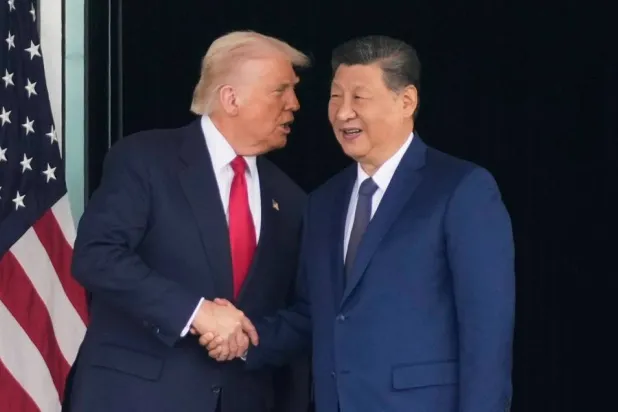
    As Presidents Xi Jinping and Donald Trump prepare for a highly anticipated summit, both China and the United States say their ties have been broadly stable in recent months and they are planning on keeping it that way.

    But a long list of issues are at stake in one of the world’s most consequential relationship, with no easy end in sight.

    Few expect major breakthroughs to the long-running frictions between China and the US, which range from competition in technology to the thorny question of Taiwan, whose main ally is the US. Ending the war with Iran is likely to be added to the agenda, with Beijing being one of the unofficial mediators in the conflict.

    “On both sides there is a consensus that US-China stability is important,” said Henrietta Levin, senior fellow for the Freeman Chair in China Studies at the Center for Strategic and International Studies in Washington. “Once you get past the question of stability, the ‘what’s next’ in the relationship gets a little more complicated, and so for that reason, the most likely thing to come out of the meeting is very little.”

    Here’s what to know about the summit:

    There may be a trade deal, but not a resolution

    The China-US trade war started with Trump’s first term, but turned up a notch in April last year, on Trump’s so-called “Liberation Day,” when he announced 34% tariffs on all Chinese goods. China retaliated with counter tariffs and other measures, such as restrictions on rare earth exports. Tariffs reached as high as 145% in the escalating back and forth.

    The two sides, realizing the sky-high tariffs weren’t sustainable, then called for a trade truce, halting many of the punitive economic measures. The two leaders met in South Korea in October and extended the truce for another year. China promised to purchase soybeans from American farmers, while the US dropped tariffs by more than half.

    “China’s strategy was to promote stability by fighting back,” said Fudan University professor Zhao Minghao, an expert in international relations. “Both sides could very well issue a comprehensive trade agreement this time. But this doesn’t mean the war is over, and the agreement will have conditions.”

    Last year’s trade truce did not resolve any of the bigger picture issues, and it did not mean a return to how things were. China now has a new export permit requirement for rare earth exports that it can tighten at any time.

    Further, this time around, “there’s been a lack of the intensive type of engagement that has characterized past summits,” said Wendy Cutler, vice president of the Asia Society, and a former trade negotiator for the US.

    China in April issued new regulations that built out a framework for identifying and countering foreign measures targeted at Chinese companies. Under the new rules, for example, China’s Ministry of Commerce told impacted companies, such as one petroleum refinery that bought Iranian crude oil, to ignore US sanctions.

    Although some say the sides could announce a continuation of the trade truce, they note they have continued to take targeted actions. “It’s a fragile truce,” said Cutler.

    The White House said Sunday they are also planning to discuss creating a new “Board of Trade” to keep their countries talking on economic issues.

    China’s ability to buy high-tech chips is still a thorny issue

    The US imposed restrictions on exports to China of advanced computer chips and related tech, such as the machines to make the chips, as early as Trump’s first term in office.

    Nvidia, a California company and the leading designer of advanced chips, has pressed Trump to allow it to export them to China. Nvidia founder Jensen Huang has argued that selling the chips will build reliance on American tech for Chinese AI firms.

    But the increasing list of restrictions on chip exports may only push China deeper in its drive for self-reliance. “China’s attitude has changed subtly, it seems more focused on advancing its domestic chip industry rather than continuing to rely on advanced chips from the United States,” Zhao said in written comments.

    China sees Taiwan as the ‘biggest risk’ in ties with the US

    Two weeks before the meeting, Chinese Foreign Minister Wang Yi said in a call with US Secretary of State Marco Rubio that the bilateral relationship has remained generally stable, but Taiwan remains the “biggest risk” to their ties. China signaled again on Thursday that Taiwan would be a top priority for discussion.

    Few expect a resolution to the Taiwan issue, lingering since China and Taiwan split in a civil war in 1949. While Beijing claims Taiwan, the island is a self-ruled democracy.

    Tensions have only risen since Taiwan first elected Tsai Ing-wen as president in 2016. Her Democratic Progressive Party says Taiwan is functionally independent and its own sovereign state. Beijing has broken off communication with Taiwan’s government, and in recent years, started sending warplanes and warships closer to the island in almost daily drills.

    The island’s current President Lai Ching-te is also from the DPP. Beijing has criticized Lai repeatedly, even depicting him as a “parasite” in propaganda imagery for its military exercises.

    The US is required by law to ensure Taiwan can defend itself but officially maintains a position of what has been called strategic ambiguity, leaving it a question of whether the US would get involved militarily if China decided to reclaim Taiwan by force. Trump has also said recently that he discussed arms sales to Taiwan with Xi, which led to further questions of whether the US would support Taiwan.

    “One possibility is that China and the US can take the strategy of a sort of ‘reciprocal restraint’, such as reducing the number of American arms sales to Taiwan, in exchange for fewer military exercises from the mainland aimed at Taiwan,” said Zhao.

    The US wants China to put pressure on Iran

    As the world awaits an end to the war in Iran that has shaken the global economy, the conflict is likely to surface in the talks.

    China has openly criticized the United States and Israel over the war. In addition, given its close political and economic ties with Iran, it is seen by some as an unofficial mediator that could influence Tehran. So far, Beijing has remained cautious, preferring to not get deeply involved.

    “I don’t think China has any interest in solving the problems the US has created for itself in the Middle East,” Levin, of the Center for Strategic and International Studies, said.

    A few days before the trip, US Treasury Secretary Scott Bessent called on China to pressure Iran to open the Strait of Hormuz, and said that by buying Iranian oil, Beijing is funding terrorism.

    “Let’s see if China — let’s see them step up with some diplomacy and get the Iranians to open the strait,” Bessent said on Fox News. “Iran is the largest state sponsor of terrorism, and China has been buying 90% of their energy, so they are funding the largest state sponsor of terrorism.”

    Original Post
  • Treasury Department Tells US Banks to Flag Suspected Iranian Money-Laundering Networks

    Treasury Department Tells US Banks to Flag Suspected Iranian Money-Laundering Networks

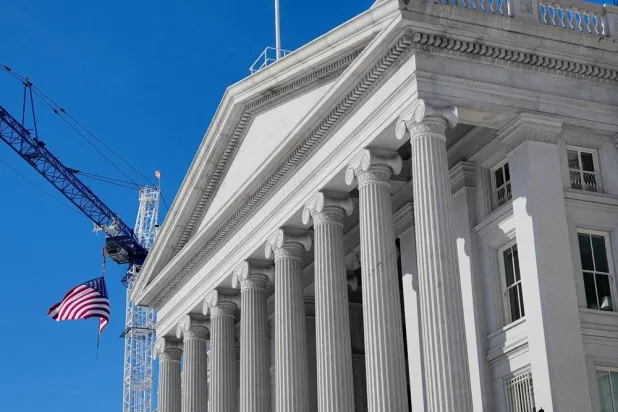
    The Treasury Department wants US banks and other financial institutions to monitor for suspected Iranian money laundering networks that use their funds to smuggle sanctioned oil through shell companies and crypto networks.

    The move, which effectively deputizes the global financial system to help disrupt Iran’s sanctions-evasion infrastructure, comes as the US and Iran reached another impasse over how to end their war while their ceasefire has grown increasingly shaky.

    President Donald Trump on Monday said the Iran ceasefire is on “life support” after he rejected Tehran’s latest proposal to end the war.

    The Trump administration is calling on banks to flag certain customers who may launder funds for Iran’s Revolutionary Guard, including newly formed companies moving unusually large amounts of money, firms that route payments through multiple intermediaries or transactions connected to Iranian crypto firms, among other indicators.

    As part of the US initiative to monitor Iranian oil sales, banks are being asked to watch out for oil labeled as “Malaysian blend” to disguise its Iranian origin, missing or falsified shipping documents or ship-to-ship oil transfers that obscure where cargo came from.

    A Treasury Financial Crimes Enforcement Network report released Monday says oil firms linked to Iran conducted roughly $4 billion in transactions in 2024.

    And dozens of shipping companies based in Iraq, the United Arab Emirates and Hong Kong — all connected to transporting sanctioned Iranian oil — processed about $707 million through US accounts in 2024.

    Along with a bombing campaign in Iran, the Trump administration has turned toward an economic-focused effort aimed at choking Tehran into submission, through sanctions and the threat of secondary sanctions on Iran’s allies.

    In April, Treasury sent a letter to financial institutions in China, Hong Kong, and others threatening to levy secondary sanctions for doing business with Iran and accusing those countries of allowing Iranian illicit activities to flow through their financial institutions.

    Original Post

  • IAE: Iran War Undermines Confidence in Strait of Hormuz

    IAE: Iran War Undermines Confidence in Strait of Hormuz

    The reputation of the Strait of Hormuz as a reliable artery for global energy trade may be permanently damaged by its prolonged closure, International Energy Agency Executive Director Fatih Birol said.

    Even if movement is restored, “the vase has been broken. You can’t glue it back together,” Birol said, warning that the disruption has undermined confidence in what was once one of the world’s most critical oil and gas choke points.

    “If it was once closed, it can be closed again,” he said, according to Bloomberg.

    Speaking to reporters in Vienna, ahead of a meeting with Haitham Al Ghais, OPEC Secretary General, Birol reiterated the historic nature of the current upheaval in global energy markets.

    “We are going through a historical period in terms of energy, foreign policy and geopolitics,” he said. “The world is going to understand very soon that it has devastating consequences for our economy.”

    The double blockade by the US and Iran of the waterway, which handled about a fifth of the world’s oil and liquefied natural gas flows, has had consequences far beyond energy markets. Everything from farm inputs to air travel has been impacted.

    Original Post

  • Iran Could Enrich Uranium to Weapons Grade if Attacked, Lawmaker Warns

    Iran Could Enrich Uranium to Weapons Grade if Attacked, Lawmaker Warns

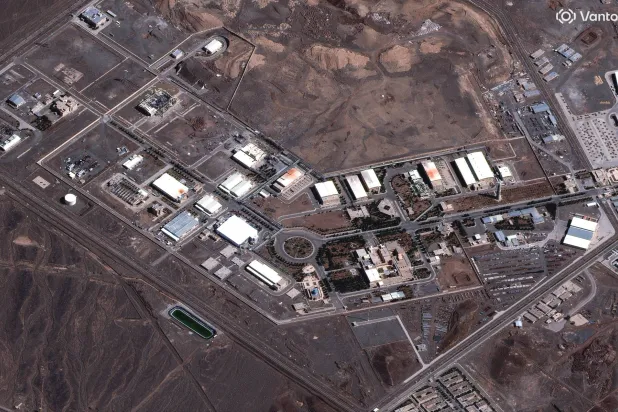
    Iran could enrich uranium up to 90% purity, a level considered ‌weapons-grade, if ‌the country is ‌attacked ⁠once more, parliamentary ⁠national security and foreign policy commission spokesperson ⁠Ebrahim Rezaei ‌said ‌on Tuesday.

    “One of ‌Iran’s ‌options in the event of another ‌attack could be 90 percent enrichment. ⁠We ⁠will review it in the parliament,” Rezaei posted on X.

    Original Post

  • Iran Reacts with Concern to Reports of Clandestine Israeli Base in Iraq

    Iran Reacts with Concern to Reports of Clandestine Israeli Base in Iraq

    Iran has reacted with concern to media reports of a clandestine makeshift Israeli military that was used during the recent war on Iran.

    Iranian Foreign Ministry spokesman Esmail Baghaei said on Monday: “We are not ruling out anything related to the Zionist entity in the region.”

    “Anything must be taken seriously and this issue is important and will certainly be discussed with Iraq,” he added.

    Israeli forces established a makeshift base using an old airstrip in Iraq’s desert during the war against Iran, two security officials told AFP on Sunday, confirming a report by The Wall Street Journal.

    Early in the war, which was ignited by joint US-Israeli attacks on Iran on February 28, the troops were detected in the Najaf desert in the country’s southwest and clashed with Iraqi forces, killing one soldier and wounding two others.

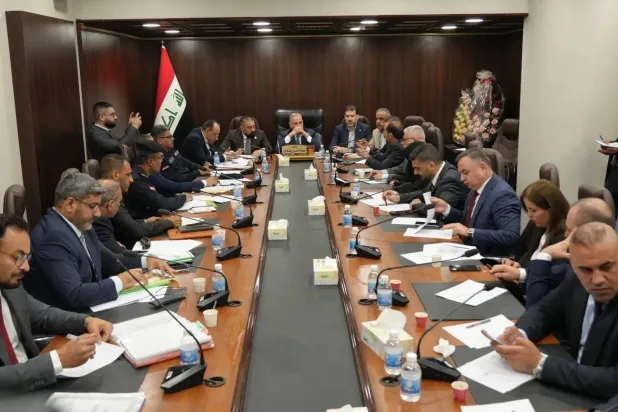
    Iraq has scrambled to address the reports. The parliamentary security and defense committee said it will meet with security leaders to probe “foreign military breaches and activities.”

    Iraq’s security media cell denied that a new airdrop had taken place in the Karbala desert in what seen as an attempt to avoid directly addressing the reports about the alleged Israeli base.

    Commenting on the western reports, head of the cell Saad Maan said they tackled an incident that took place on March 5.

    “Iraqi security and military forces engaged in combat with an unlicensed force at a time, leading to the death of a member of the security forces and injury of two others,” he said. WSJ had not spoken about a new military deployment in the area.

    Maan continued: “A search of the area last month and this month did not reveal traces of any unlicensed forces or equipment. Our forces will continue to carry out their duties.”

    There are no “unlicensed forces” in any other region in Iraq, he added.

    Hussein Allawi, advisor to outgoing Prime Minister Mohammed Shia al-Sudani, offered a different account of what happened.

    Speaking to Al Arabiya, he said that the airdrop “aimed at collecting something that had fallen from the sky over the Iraqi desert during the US-Israel war on Iran.”

    A shepherd who was in the area informed security forces of unusual activity. The forces then headed to the scene, which thwarted the airdrop, he explained.

    He denied that Israel had set up a base in Iraq, saying the WSJ report was “inaccurate and aimed to stir up certain issues.”

    On Sunday, the parliamentary security and defense committee said it will host security leaders to investigate “foreign military breaches and activities” in the border regions between Karbala and al-Anbar.

    It stressed its “categorical” rejection that Iraq become an arena for settling scores or that it be turned into a platform for attacks against neighboring countries.

    Committee member Karim Aliwi Al-Muhammadawi told the Iraqi News Agency that he had previously warned of the presence of US forces in the region between Karbala and al-Anbar.

    He confirmed the shepherd report of foreign forces in the area.

    “Preliminary reports found that efforts had been made to turn the region into a support point for military operations against Iran,” he revealed, saying the drone and rocket attacks would have been launched from there.

    The committee will meet with the security leaders to further investigate the issue, he said. The government will take the necessary measures to tackle the violation of Iraq’s sovereignty.

    Original Post

  • Land Registration in East Jerusalem Israeli ‘Tool’ to Expel Palestinians

    Land Registration in East Jerusalem Israeli ‘Tool’ to Expel Palestinians

    Initial data from a land registration drive launched in Israeli-annexed east Jerusalem point to a “deeply alarming” trend of land appropriation by the Israeli state, an Israeli rights group said Monday.

    Land registration in East Jerusalem began during the British Mandate between 1923 and 1948, and continued under the Jordanian administration starting in 1949.

    Israel resumed land registration in east Jerusalem in 2018, reviving a process that had largely been suspended after it occupied and annexed the territory in 1967, said Bimkom, an Israeli rights group focused on urban planning and the protection of Palestinian rights in east Jerusalem.

    The rights group examined the first official data covering roughly 2.3 square kilometers, or about 3% of east Jerusalem, where registration procedures have been completed.

    It found that 82% of the land surveyed had been registered under the Israeli state or the Jerusalem municipality.

    Another 9% was listed under “unknown owners” — a classification the group described as an initial step toward eventual state takeover — while 4% was registered to Jewish owners, most of them connected to the settler movement, according to AFP.

    According to Bimkom, approximately 4% of the plots were registered to churches, while only 1% were recorded under Palestinian ownership.

    Bimkom warned that the registration process is being used by Israeli authorities for “effectively taking land … from beneath people’s feet,” calling it “deeply alarming.”

    “This data clearly indicates that the renewed… procedures do not serve — and were not intended to serve — the Palestinian residents of the city, but rather to provide a bureaucratic tool for the appropriation of Palestinian land for the benefit of the state,” it said.

    The registration process advances plot by plot and lacks transparency, Bimkom architect Sari Kronish told AFP.

    “There is no transparency regarding why and how the choices of where to begin are made,” Kronish said.

    The areas where registration has already been completed largely correspond to vacant land earmarked for settlement construction, a pattern Bimkom says reinforces concerns that political motivations are driving the process.

    The NGO added that a small part of these zones include Palestinian homes, but most of which have been registered under the state or entities linked to settlement groups.

    Until Monday noon, Israel’s justice ministry, which oversees the registration process, did not respond to requests for comment.

    Bimkom denounced what it described as increasingly restrictive measures toward Palestinians, for whom proving land ownership has become nearly impossible.

    Jerusalem lies at the core of the Israeli-Palestinian conflict.

    Also, the report said that in 2025, Israeli authorities approved only about 640 housing units for Palestinians in East Jerusalem, compared to roughly 9,000 units approved for Jewish residents across the city.


    Original Post