Blog

  • Czech Police Seek Thief who Stole Saint’s Skull

    Czech Police Seek Thief who Stole Saint’s Skull

    An unidentified thief stole the skull of Czech saint Zdislava of Lemberk from a glass shrine in a northern Czech church, causing “incalculable” historic damage, police said late on Tuesday.

    St Zdislava of Lemberk (estimated 1220-1252), a noblewoman known for her merciful and charitable deeds, was canonized by Pope John Paul II in 1995.

    The theft in the basilica of St Lawrence and St Zdislava in the northern town of Jablonne v Podjestedi was committed after 1600 GMT, said police spokeswoman Dagmar Sochorova.

    “An unknown culprit broke a shrine in which the skull was stored and ran away from the site,” AFP quoted her as saying.

    Police published “low quality footage” depicting the culprit clad “probably” in black and wearing “probably” white shoes, and asked the public for help.

    “The value of the stolen skull is currently being investigated. However, its historic value is obviously incalculable,” Sochorova added.

    Prague Archbishop Stanislav Pribyl, who also heads the Litomerice diocese in charge of the Jablonne church, said the news was “devastating”.

    Placed on an altar in a side chapel, the skull “was the subject of adoration for pilgrims travelling to Jablonne where Zdislava lived and worked more than 750 years ago,” he said.

    “I can’t believe that someone commits a daylight robbery to steal from a church a relic whose value is above all historic,” added Pribyl, who was named Prague archbishop in February.

    Original Post

  • Trump Heads to China, Stresses Need to Stop Iran’s Nuclear Program

    Trump Heads to China, Stresses Need to Stop Iran’s Nuclear Program

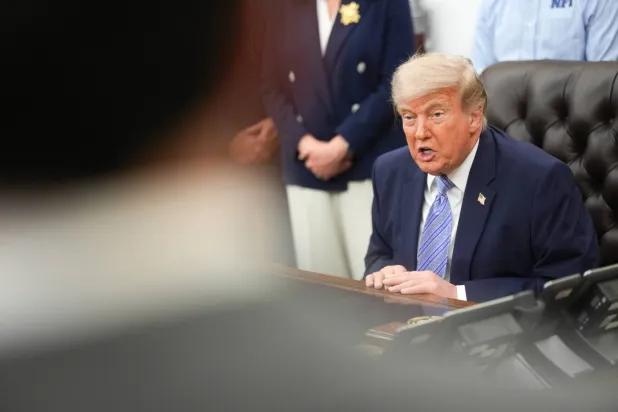
    US President Donald Trump said on Tuesday that Americans’ financial struggles are not a factor in his decision-making as he seeks to negotiate an end to the Iran war, saying that preventing Tehran from acquiring a nuclear weapon is his top priority.

    Asked by a reporter to what extent Americans’ financial situations were motivating him to strike a deal, Trump said: “Not even a little bit.”

    “The only thing that matters, when I’m talking about Iran, they can’t have a nuclear weapon,” Trump said before departing the White House for a trip to China. “I don’t think about Americans’ financial situation. I don’t think about anybody. I think about one thing: We cannot let Iran have a nuclear weapon. That’s all. That’s ⁠the only thing ⁠that motivates me.”

    Trump’s remarks are likely to draw scrutiny from critics who argue the administration should balance geopolitical objectives with the economic impact on Americans, particularly as cost-of-living concerns remain a top issue for voters ahead of the November midterm elections.

    Asked to elaborate on the president’s comments, White House Communications Director Steven Cheung said that Trump’s “ultimate responsibility is the safety and security ⁠of Americans. Iran cannot have a nuclear weapon, and if action wasn’t taken, they’d have one, which threatens all Americans.”

    Trump is under growing pressure from fellow Republicans who fear economic pain caused by the war could spark a backlash against the party and cost it control of the House of Representatives and possibly the Senate in November.

    Rising energy costs linked to the Iran conflict have pushed up gasoline prices and contributed to inflation.

    US consumer inflation in April posted its largest gain in three years, according to data released on Tuesday.

    Trump framed his approach as a matter of national and ⁠global security, suggesting ⁠economic concerns were secondary to preventing nuclear proliferation.

    In Beijing, Trump is set to hold a highly anticipated summit with Chinese leader Xi Jinping.

    “We’re the two superpowers,” Trump told reporters as he departed the White House. “We’re the strongest nation on Earth in terms of military. China’s considered second.”

    The Trump administration hopes to begin the process of establishing a “Board of Trade” with China to address differences between the countries. The board could help prevent the trade war ignited last year after Trump’s tariff hikes, an action China countered through its control of rare earth minerals. That led to a one-year truce last October.

    Original Post

  • Iraq Resumes Condensate Exports after Shipping Disruption

    Iraq Resumes Condensate Exports after Shipping Disruption

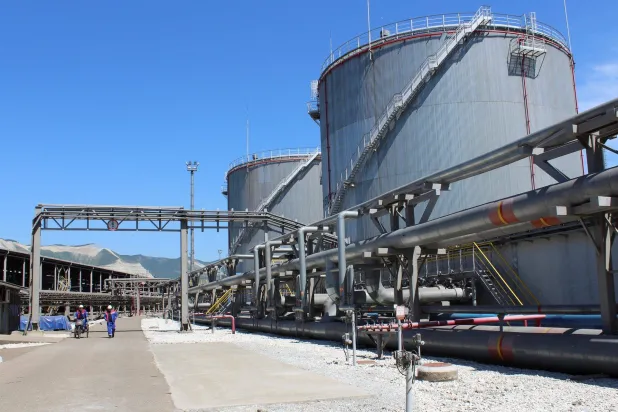
    Iraq resumed condensate exports on Tuesday after a suspension caused by the Iran conflict and disruptions to regional shipping operations, the oil ministry said.

    Deputy Oil Minister for Gas Affairs Izzat Saber Ismail announced that Basra Gas Company had loaded 50,000 cubic meters of condensate onto the tanker Dakosh, adding that the cargo was shipped in line with technical and commercial standards.

    The tanker departed on Tuesday after completing technical and logistical procedures, he said in a statement.

    “This achievement was made possible through coordination between the ministry, Basra Gas Company and related entities to overcome challenges and ensure smooth export operations,” Ismail stated.

    He added that Iraq was working to maintain normal tanker traffic and loading operations in the coming days to stabilize exports and meet contractual commitments.

    Separately, Deputy Oil Minister Bassem Mohammed Khudair said Iraq could restore more than 3 million barrels per day of crude exports to global markets within 168 hours if navigation restrictions in the Strait of Hormuz were lifted.

    “This is not merely a technical figure, but a message of confidence to global markets reflecting the resilience of export infrastructure at Basra’s ports and offshore loading terminals in the northern Gulf,” Khudair told press agencies.

    He added that Iraq continued to rely on infrastructure at its southern ports and emergency plans prepared by the oil ministry to maintain exports.

    Khudair noted that Iraq was still exporting around 200,000 barrels per day from the Kirkuk fields to Turkey’s port of Ceyhan, while efforts were underway to ship additional Basra crude through Syrian ports.

    Iraq had previously cut crude production to 1.5 million barrels per day from more than 4.2 million bpd after declaring force majeure following the outbreak of the US-Iran conflict on Feb. 28. Exports also fell to 200,000 bpd from 3.6 million bpd before the conflict.

    Original Post

  • Magic Johnson Urges Fans to Make Los Angeles their World Cup Destination

    Magic Johnson Urges Fans to Make Los Angeles their World Cup Destination

    Los Angeles sports royalty and former NBA great Earvin “Magic” Johnson on Tuesday urged fans from around the world to make Los Angeles their World Cup destination, calling the city the “sports capital of the world.”

    A ’30 Days to FIFA World Cup 2026′ event at SoFi Stadium highlighted the sprawling city’s desire to ensure visitors experience more than an in-and-out soccer stop, Reuters reported.

    “The world game is coming to the greatest city in the world,” Johnson said, beaming, at the event designed to entice travelers not only for the tournament but also for the city’s attractions and its role as a global sports hub.

    Johnson, a five-time National Basketball Association champion and three-time Most Valuable Player, said this was the time to be in Los Angeles ⁠because “great events are ⁠coming to our city,” including the World Cup, the NFL Super Bowl, and the 2028 Olympics.

    Los Angeles hosts eight World Cup matches, featuring the national teams of the United States, Paraguay, Iran, New Zealand, Switzerland, Bosnia, Belgium and Türkiye.

    The expanded tournament will be played across North America, with matches in 16 host cities in Mexico, the United States and Canada. It will feature 48 national ⁠teams, up from the usual 32.

    Local and visiting fans will be able to enjoy a “giant soccer carnival” across the city, said Kathryn Schloessman, President and CEO of Los Angeles Sports and Entertainment Commission and host committee CEO.

    The city’s commitment to affordable transportation options was also underlined, with $1.75 tickets to the stadium standing in stark contrast to some of the prices that have drawn controversy on the East Coast.

    The World Cup’s local impact has been debated for months. Critics have raised concerns about regional homelessness, poverty and the cost to taxpayers, warning that the most vulnerable could be hit by price increases, housing ⁠pressures linked to ⁠the event and disruption to urban services.

    Los Angeles is also hosting the tournament’s US opening ceremony on June 12, featuring pop star Katy Perry. The show follows an opening ceremony in Mexico City the day before and another in Toronto earlier on June 12, underscoring the tournament’s three-country footprint.

    While best known for US sports powerhouses such as the Lakers, Dodgers, Rams and Chargers, Los Angeles has also attracted high-profile soccer stars late in their careers, including David Beckham, Zlatan Ibrahimovic and Steven Gerrard, all of whom played for the LA Galaxy.

    The city’s World Cup committee has taken advantage of its proximity to Hollywood’s famous residents by involving Snoop Dogg, Eva Longoria, Will Ferrell and other celebrities as “community ambassadors.”

    Original Post

  • Defections Hit Sudan’s RSF … Has the Breakup Phase Begun?

    Defections Hit Sudan’s RSF … Has the Breakup Phase Begun?

    Sudan’s Rapid Support Forces (RSF) are facing a growing wave of defections, raising questions over the future of the paramilitary group’s military cohesion and tribal alliances as the conflict with the Sudanese army enters its fourth year and turns into a prolonged war of attrition.

    The latest and most prominent defection came from senior field commander Ali Rizqallah, known as “Al-Safana,” one of the RSF’s leading battlefield commanders in Darfur and Kordofan.

    His departure follows a series of similar moves in recent months, including the defection of Major General Al-Nour Ahmed Adam, known as “Al-Nour Al-Qubba,” and field commander Bishara Al-Huwaira, who left RSF ranks in North Kordofan weeks ago. Before them, Abu Aqla Keikel, commander of the Sudan Shield Forces, became one of the first high-profile defectors in late 2024.

    Observers say Al-Huwaira’s defection carries particular military significance because of his position in the Bara area near El-Obeid, the Sudanese army’s main stronghold in North Kordofan. The area is a strategic junction linking western Sudan with the east and center of the country and serves as a key corridor for supplies, fuel and fighters.

    Local reports said Al-Huwaira joined the Sudanese army with a force of between 11 and 15 fully equipped combat vehicles, in what was seen as another blow to the RSF despite efforts by its leadership to downplay the impact.

    After Al-Nour Al-Qubba defected in April, there was speculation that Al-Safana would be the next commander to leave, especially after reports emerged that he had withdrawn from the battlefield and traveled abroad. He later appeared in a video denying those reports before formally announcing his defection weeks later.

    Sources said Al-Safana had left the frontlines for Uganda before traveling to India for medical treatment. He later appeared in a video from an undisclosed location believed to be in India, announcing he had left the RSF.

    Although Al-Safana said he was not aligning himself with any armed faction, sources close to the Sudanese army expect him to formally join the military. RSF sources, meanwhile, insisted that the move posed no real threat to the force or to the “Sudan Founding Alliance” project run by the RSF in areas under its control.

    RSF leaders say the departure of some commanders has not altered the balance of power on the ground, stressing the group still controls territories it captured during the war and that field units linked to those commanders continue to fight under its banner.

    But analysts say the defections carry significance beyond their immediate military effect because of the RSF’s structure, which relies heavily on tribal loyalties, local alliances and influential field commanders, particularly in Darfur.

    Unlike conventional armies with centralized command structures, the RSF has relied since its inception on tribal alliances and armed groups with overlapping loyalties. While that structure helped it expand rapidly, it also left it vulnerable to internal divisions and shifting allegiances as the war dragged on.

    Analysts also attribute the defections to growing tensions within the RSF leadership, where commander Mohamed Hamdan Dagalo, known as Hemedti, and his brother Abdel Rahim Dagalo control military decision-making, reportedly sidelining some field commanders.

    While the defections are unlikely to immediately shift the military balance, observers say they could deepen internal instability within the RSF and gradually weaken its military and tribal cohesion.

    Original Post

  • Bahrain Sentences Three to Life for Spying for Iran’s IRGC

    Bahrain Sentences Three to Life for Spying for Iran’s IRGC

    Bahrain’s High Criminal Court on Tuesday sentenced 24 defendants in separate cases tied to espionage for Iran’s Revolutionary Guard Corps (IRGC), support for Iranian attacks against the Kingdom, and acts of violence and sabotage linked to those attacks.

    The rulings included life sentences for three defendants, prison terms of up to 10 years for others, financial penalties, confiscation of seized materials, and the permanent deportation of three convicts after serving their sentences.

    According to the head of the Terror Crimes Prosecution, the first case involved a woman convicted of spying for the IRGC through a social media account used to publish photographs and coordinates of strategic sites and key facilities inside Bahrain, along with content deemed harmful to the country’s military, political, and economic interests. The court sentenced her to life imprisonment.

    He added that the defendant admitted using her account to assist hostile entities by sharing images and coordinates of sensitive locations, accompanied by comments suggesting they could be targeted. She also posted videos and images of previously attacked sites with the intent of glorifying and promoting those attacks.

    In a second case, investigations by the General Directorate of Criminal Investigation and Forensic Science uncovered an Iranian intelligence and IRGC-backed network tasked with monitoring critical infrastructure in Bahrain in preparation for terrorist attacks aimed at undermining national security and stability.

    The Bahraini official said the first defendant, who fled to Iran, recruited a second defendant inside Bahrain to carry out terrorist operations, transfer funds to extremist elements, and collect intelligence on strategic facilities for transmission to the IRGC and Iranian intelligence agencies. Both men were sentenced to life in prison and fined 10,000 Bahraini dinars each — about $26,500 — in addition to the confiscation of seized items.

    The court also issued rulings in nine additional cases involving praise for the Iranian attacks, dissemination of prohibited sensitive information, and photographing restricted sites. Ten defendants received prison terms of up to 10 years, while some were fined 2,000 dinars and ordered deported after completing their sentences.

    In four separate cases linked to unrest during the Iranian attacks in March, 11 defendants were sentenced to prison terms of up to five years for violence and sabotage. Some were also fined 500 dinars.

    Bahrain’s Public Prosecution said offenses involving espionage for foreign entities, justification of terrorism, dissemination of prohibited information, and acts of sabotage constitute crimes against state security and civil peace, warning that strict legal action would continue against anyone involved in such activities.

    Original Post

  • US-Saudi Business Council Unveils Powerhouse Board of Directors

    US-Saudi Business Council Unveils Powerhouse Board of Directors

    The US-Saudi Business Council (USSBC) has announced the appointment of its significantly expanded and reconstituted Board of Directors, featuring an unprecedented lineup of global industry leaders.

    “This strategic move underscores the Council’s revitalized mission to deepen and diversify economic ties between the United States and Saudi Arabia by leveraging expertise from critical sectors shaping the global economy,” USSBC said in a statement on Tuesday.

    Co-Chaired by Chair of the Corporate Board of the Olayan Group Lubna Olayan, and Jane Fraser, Chair and CEO of Citi, the new Board brings together influential figures across finance, energy, technology, travel, defense, infrastructure, consumables and advanced industry.

    “Their collective leadership will uniquely position the Council to drive innovation, investment and strategic partnerships aligned with US economic priorities, Saudi Arabia’s Vision 2030 and the evolving global landscape,” the statement added.

    The newly appointed US members include:
    Ruth Porat, President and Chief Investment Officer of Alphabet and Google
    Brian Moynihan, Chair and CEO of Bank of America
    Brendan Bechtel, Chairman and CEO of Bechtel Corporation
    Larry Fink, Chairman and CEO of BlackRock
    Mike Wirth, Chair and CEO of Chevron
    Chuck Robbins, Chair and CEO of Cisco
    James Quincey, Executive Chair of The Coca-Cola Company
    Noel Wallace, Chair, President and CEO of Colgate-Palmolive
    Ed Bastian, CEO of Delta Air Lines
    Jim Fitterling, Chair and CEO of Dow
    Darren Woods, Chair and CEO of ExxonMobil
    Jenny Johnson, CEO of Franklin Templeton
    Chris Nassetta, President and CEO of Hilton
    Vimal Kapur, Chair and CEO of Honeywell
    James Taiclet, Chair, President and CEO of Lockheed Martin

    They are joined by leaders from key sectors driving Saudi Arabia’s economic transformation, including:
    Tareq Amin, CEO of Humain
    John Pagano, CEO of Red Sea Global and Managing Director of AlUla Development Company
    Kamal Bahamdan, CEO of Safanad
    Tareq AlSadhan, CEO of Saudi National Bank
    Abdullah Al Zamil, Chair of SENAAT (formerly Zamil Industries)

    The Board also retains long-serving members Amin Nasser, President and CEO of Aramco, Robert Wilt, CEO of Ma’aden, Rami Al Turki, President and CEO of Alturki Holding, and Charles Hallab, President and CEO of the US-Saudi Business Council.

    “This Board represents an extraordinary alignment of global leadership at a pivotal moment in the bilateral relationship, one that is consistent with a reinvigorated and reimagined role for the Council in the US-Saudi partnership,” said Hallab.

    “Their collective expertise across areas critical to both economies positions the Council to advance bilateral trade, investment, and business collaboration like never before. We are very excited for the next chapter, and we are also deeply grateful to our long-serving Board members for their commitment and contribution to the Council’s mission over the years.”

    Olayan said she looked forward to translating the partnership into a meaningful collaboration, and long-term value for the two countries’ economies.

    As for Fraser, she said: “The caliber of leaders joining our board signals the significant momentum of the US–Saudi business partnership.”

    The formation of the Board comes at a time of accelerating economic engagement between the US and Saudi Arabia.

    “With a refined and revitalized mission, the US-Saudi Business Council is reinforcing its role as a leading platform for private-sector leadership and engagement—strengthening connectivity between US and Saudi businesses, enabling strategic partnerships, and supporting the expansion of bilateral trade and investment,” USSBC said.

    Original Post

  • Man City Boss Guardiola: VAR Decisions Like the Flip of a Coin

    Man City Boss Guardiola: VAR Decisions Like the Flip of a Coin

    Manchester City manager Pep Guardiola compared the Video Assistant Referee (VAR) system to the flip of a coin on Tuesday and said his side must play well enough to avoid any impact from decisions that go against them.

    VAR has been under renewed scrutiny this week after West Ham United’s late equalizer against Premier League leaders Arsenal was disallowed, a decision that could prove crucial in the title ⁠race.

    “The only thing ⁠we can do is do it (perform) better, that is only in your control,” Reuters quoted Guardiola as telling reporters ahead of Wednesday’s home game against Crystal Palace.

    “We lost the two finals of the FA Cup because ⁠the referees didn’t do their jobs they should do, even the VAR. When this happens it is because we have to do better, not the referees or VAR.

    “I never trust anything since I arrived (at City) a long time ago. I learned you have to do it better, be in a position to do it better because (if not) ⁠you ⁠blame yourself with what you have to do, because (VAR) is a flip of a coin.”

    City trail Arsenal by five points but have played one game fewer than the London side.

    “We play in this game, we go to Bournemouth and the last game in Aston Villa. The important one is tomorrow and we will see what happens to the next games,” Guardiola said.

    Original Post

  • Aoun Awards Al-Bukhari the National Order of the Cedar: Saudi Arabia Remains a Steadfast Supporter of Lebanon

    Aoun Awards Al-Bukhari the National Order of the Cedar: Saudi Arabia Remains a Steadfast Supporter of Lebanon

    Lebanese President Joseph Aoun affirmed that Saudi Arabia remains a steadfast supporter of Lebanon, praising the role of Custodian of the Two Holy Mosques King Salman bin Abdulaziz and Crown Prince Mohammed bin Salman.

    Prime Minister Nawaf Salam, meanwhile, commended the considerable efforts made by Saudi Ambassador Waleed Al-Bukhari to strengthen and deepen bilateral ties between the two countries.

    Aoun made the remarks on Tuesday during a meeting with the Saudi ambassador at the presidential palace in Baabda where he awarded the diplomat the National Order of the Cedar, rank of Grand Officer, on the occasion of the conclusion of his diplomatic mission in Lebanon and in recognition of his efforts to enhance Lebanese-Saudi relations.

    Aoun said that the ties binding Lebanon and Saudi Arabia transcend longstanding historical and brotherly relations, stressing that the Kingdom has, throughout the years, remained a constant pillar of support for Lebanon under all circumstances. He added that Saudi Arabia’s generous initiatives reflect its enduring commitment to the country’s stability and prosperity.

    The Lebanese president also praised the leadership of King Salman and Crown Prince Mohammed bin Salman, saying their vision has contributed to promoting development and stability across the region.

    Al-Bukhari thanked the president for awarding him the decoration and expressed hope that Lebanon would regain its pioneering regional role, and that its people would enjoy lasting security and stability.

    The Ambassador also met Parliament Speaker Nabih Berri during a farewell visit that, according to a statement issued by the Speaker’s office, included discussions on the general situation in Lebanon and bilateral relations between Lebanon and Saudi Arabia.

    In a separate farewell meeting, Salam received the diplomat at the Grand Serail, where he praised “the significant efforts exerted by Ambassador Al-Bukhari in consolidating and advancing bilateral relations between Lebanon and the Kingdom of Saudi Arabia, as well as the pivotal role he played during a delicate period in our nation’s history.”

    Original Post

  • Saudi Arabia: KAUST Study Reveals How Plants Protect Photosynthesis During Extreme Heat

    Saudi Arabia: KAUST Study Reveals How Plants Protect Photosynthesis During Extreme Heat

    King Abdullah University of Science and Technology (KAUST) has completed a research study identifying how plants protect photosynthesis under high temperatures, an outcome that could support the development of more resilient crops in desert climates.

    The research team identified a protective mechanism within chloroplasts, lead researcher Professor Monika Chodasiewicz said, noting that it helps preserve and restore the plant’s ability to convert sunlight into chemical energy.

    The findings are particularly significant, as heat is one of the main threats to plant productivity, and protecting photosynthesis is essential for sustaining plant growth and crop yields, Chodasiewicz added.

    She explained that the chlorophyll protein forms protective granules, revealing their previously unclear functional significance. The findings provide new insights that could be applied for future crop breeding and biotechnology, Chodasiewicz said.

    The results also contribute to the emerging field of phase-separated biomolecular condensates in plant biology, while supporting broader priorities related to sustainable agriculture, climate adaptation, and food security.

    Original Post